Bromobenzyl cyanides, liquid
HMT 15 June 2026- UN / ID
- UN 1694
- Hazard class
- 6.1
- Packing group
- I
- ERG guide
- ERG 159
- Special provisions
- Source
- 49 CFR §172 (15 June 2026)
Bromobenzyl cyanides, liquid
Bromobenzyl cyanide (BBC), also known in the military idiom as camite, is an obsolete lachrymatory agent introduced in World War I by the Allied Powers, being a standard agent, along with chloroacetophenone, adopted by the Chemical Warfare Service. It was thought to have been phased out in the 1930s, but has allegedly seen use in 2024, when authorities in the Republic of Georgia are said to have used it to quell anti-government protests. When implemented in World War I, it revolutionized the use of tear agents due to its extreme potency and great persistence. Bromobenzyl cyanide has been described as too toxic for use as a non-lethal crowd control agent Wikipedia
| Emergency Response Guide No. 159 |
Hazardous Materials Table
Source: 49 CFR §172 (15 June 2026)(3) Hazard class6.1Poisonous Material |
(4) Identification number |
(5) Packing Group |
||||||||
(6) Labels |
||||||||||
(7) Special Provisions (§172.102)
|
||||||||||


| T14 | |
|---|---|
| TP2 | a. The maximum degree of filling must not exceed the degree of filling determined by the following: 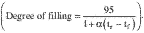 Where: t<sub>r</sub> is the maximum mean bulk temperature during transport, t<sub>f</sub> is the temperature in degrees celsius of the liquid during filling, and α is the mean coefficient of cubical expansion of the liquid between the mean temperature of the liquid during filling (t<sub>f</sub>) and the maximum mean bulk temperature during transportation (t<sub>r</sub>) both in degrees celsius. b. For liquids transported under ambient conditions α may be calculated using the formula:  Where: d<sub>15</sub> and d<sub>50</sub> are the densities (in units of mass per unit volume) of the liquid at 15 °C (59 °F) and 50 °C (122 °F), respectively. |
| TP13 | |
| W31 |
(8) Packing Authorizations (§173.***) 
| (8A) Exceptions | None | |
|---|---|---|
| (8B) Non-bulk | 201 | see 49 CFR §173.201 |
| (8C) Bulk | 243 | see 49 CFR §173.243 |
(9) Quantity Limits
| (9A) Passenger aircraft/rail | Forbidden |
|---|---|
| (9B) Cargo aircraft only | 30 L |
(10) Vessel stowage
| (10A) Location | |
|---|---|
| (10B) Other |
Segregation chart for load, transport, and storage
This chart shows whether loading, transport, or storage with other hazard classes is permitted, prohibited, or restricted. Based on 49 CFR §177.848.
Scope & sources (important)Click to show CFR references
This check evaluates segregation per 49 CFR §177.848. Additional loading/unloading and handling requirements may still apply; see 49 CFR §177 Subpart B (Loading and Unloading):
- §177.834 - General requirements
- §177.835 - Class 1 materials
- §177.837 - Class 3 materials
- §177.838 - Class 4 (flammable solid) materials, Class 5 (oxidizing) materials, and Division 4.2 (pyroforic liquid) materials
- §177.839 - Class 8 (corrosive) materials
- §177.840 - Class 2 (gases) materials
- §177.841 - Division 6.1 and Division 2.3 materials
- §177.842 - Class 7 (radioactive) material
- §177.843 - Contamination of vehicles
Similar substances
| UN / ID | Proper shipping name | Hazard class |
|---|---|---|
| UN 3449 | Bromobenzyl cyanides, solid | 6.1 |