Dipentene
Limonene () is a slightly yellow-green liquid aliphatic hydrocarbon classified as a cyclic monoterpene, and is the major component in the fragrance and essential oil of citrus fruit peels, taking its name from Italian limone ("lemon"). Limonene is a chiral molecule, and most biological sources produce just one enantiomer (isomer). The (+)-isomer, d-limonene, which is the (R)-enantiomer, occurs more commonly in nature in citrus fruit peels, the principal commercial source, from which it is obtained commercially by two primary methods: centrifugal separation and steam distillation. d-Limonene is used as a flavoring agent in food manufacturing, in chemical synthesis as a precursor to carvone, and as a renewables-based solvent in cleaning products Wikipedia
Substance Data
Source:
PubChem (HSDB, 22.10.2026)
CAS-Number138-86-3 |
Flash Point45 ° C | Boiling Point15.5 ° C |
Hazardous Materials Table
Source:
49 CFR §172 (15 June 2026)
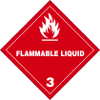
(3) Hazard class 3
Flammable liquids |
UN 2052 |
III |
 |
×Note:Special provisions may be very complex. The extracts are taken from 49 CFR §172.102. Please be careful with the information, as necessary, additional conditions may be applied that are not written here. Please check the original source and report bugs. | B1 | If the material has a flash point at or above 38 °C (100 °F) and below 93 °C (200 °F), then the bulk packaging requirements of § 173.241 of this subchapter are applicable. If the material has a flash point of less than 38 °C (100 °F), then the bulk packaging requirements of § 173.242 of this subchapter are applicable. Browse special provision B1 |
|---|
| IB3 | <sub>Authorized IBCs:</sub> Metal (31A, 31B and 31N); Rigid plastics (31H1 and 31H2); Composite (31HZ1 and 31HA2, 31HB2, 31HN2, 31HD2 and 31HH2). <sub>Additional Requirement:</sub> Only liquids with a vapor pressure less than or equal to 110 kPa at 50 °C (1.1 bar at 122 °F), or 130 kPa at 55 °C (1.3 bar at 131 °F) are authorized, except for UN2672 (also see special provision IP8 in Table 2 for UN2672). Browse special provision IB3 |
|---|
| T2 | | Minimum test pressure (bar) | 1.5 |
|---|
| Minimum shell thickness | § 178.274(d)(2) |
|---|
| Pressure-relief requirements | Normal |
|---|
| Bottom opening requirements | § 178.275(d)(3) |
|---|
Browse special provision T2 |
|---|
| TP1 | The maximum degree of filling must not exceed the degree of filling determined by the following: 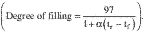 Where: t<sub>r</sub> is the maximum mean bulk temperature during transport, and t<sub>f</sub> is the temperature in degrees celsius of the liquid during filling. Browse special provision TP1 |
|---|
|
|
|
| (9A) Passenger aircraft/rail | 60 L |
|---|
| (9B) Cargo aircraft only | 220 L |
|---|
|
| (10A) Location | A Stowage category “A” means the material may be stowed “on deck” or “under deck” on a cargo vessel or on a passenger vessel. Source: 49 CFR §172.101(k) |
|---|
| (10B) Other | — |
|---|
|
Segregation chart for load, transport, and storage
This chart shows whether loading, transport, or storage with other hazard classes is permitted, prohibited, or restricted. Based on 49 CFR §177.848.
Full segregation table for class 3 · Browse UN entries for this class
![Prohibited]() |
Must not be loaded, transported, or stored together in the same vehicle or facility. |
![Permitted]() |
May be loaded, transported, or stored together. |
![Restricted]() |
May be loaded, transported, or stored together only with restrictions. |
