Information only — not personal consulting. Verify against current official regulations. Help and scope
HazMat Tool — substance information
Reference only — not a shipping paper, placard mandate, or CVI record.
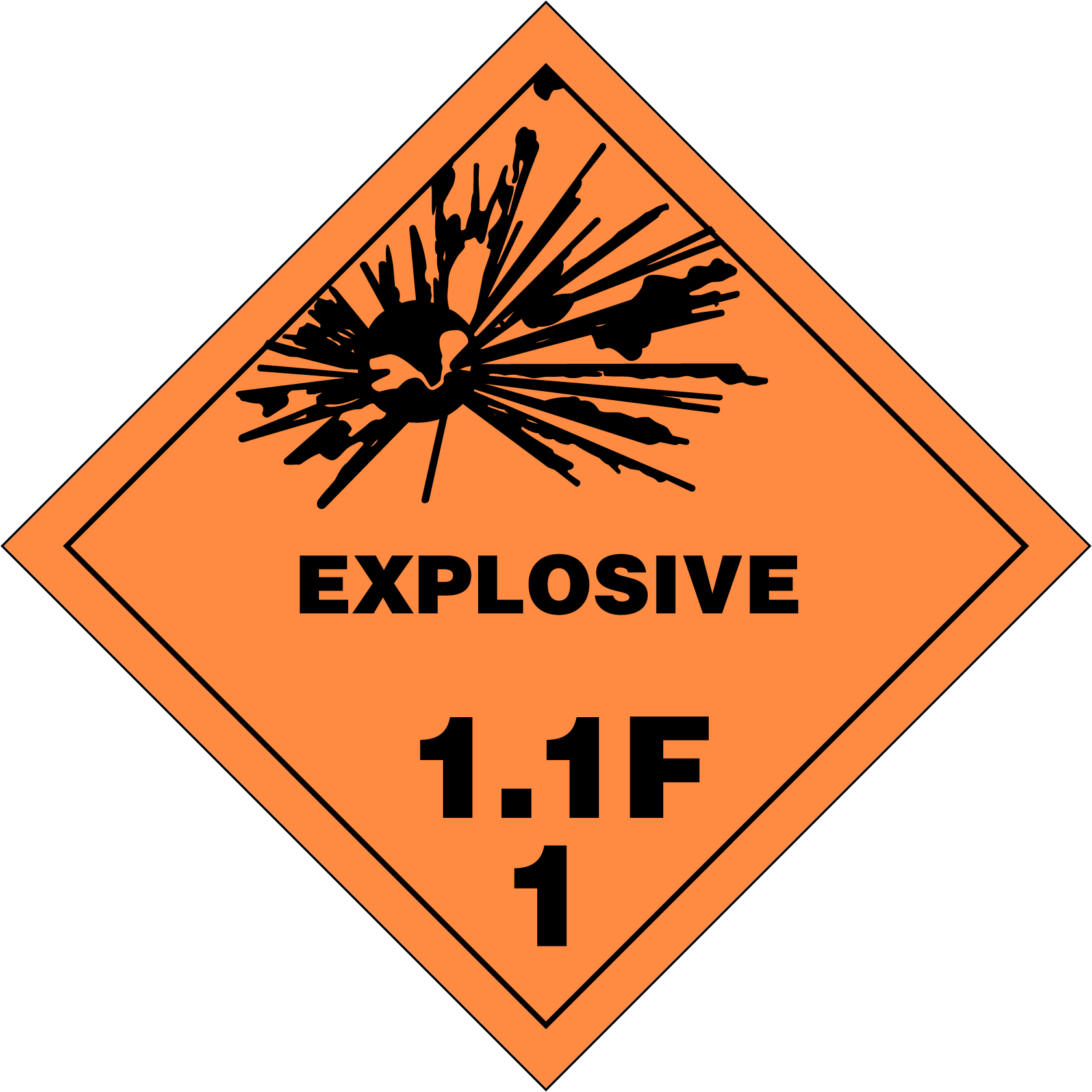
Grenades, hand or rifle, with bursting charge
HMT 15 June 2026
Reference only — HMT snapshot for inspection and audit support; not a shipping paper, placard mandate, or CVI record.
Use Print / PDF below for field notes.
A grenade is a small explosive projectile. It can be thrown by hand (hand grenade), launched by a rifle attachment, or launched by a dedicated launcher. A modern hand grenade generally consists of an explosive charge ("filler"), a detonator mechanism, an internal striker to trigger the detonator, and an arming safety secured by a transport safety. The user removes the transport safety pins before throwing, and once the grenade leaves the hand the arming safety gets released, allowing the striker to trigger a primer that ignites a fuze (sometimes called the delay element), which burns down to the detonator and explodes the main charge Wikipedia
Compatibility group of explosives - Description of substances or article to be classified
Group: F
Article containing a secondary detonating explosive substance with its means of initiation, with a propelling charge (other than one containing flammable liquid or gel or hypergolic liquid) or without a propelling charge.
Stowage category “03” means the material may be stowed “on deck” in closed cargo transport units or “under deck” on a cargo vessel (up to 12 passengers) but the material is prohibited on a passenger vessel.
Compatibility group of explosives - Description of substances or article to be classified
Group: D
Secondary detonating explosive substance or black powder or article containing a secondary detonating explosive substance, in each case without means of initiation and without a propelling charge, or article containing a primary explosive substance and containing two or more effective protective features.
Stowage category “03” means the material may be stowed “on deck” in closed cargo transport units or “under deck” on a cargo vessel (up to 12 passengers) but the material is prohibited on a passenger vessel.
Multiple packing groups apply to this entry. See assignment criteria in 49 CFR §173 Subpart D. Details are in the tabs above; differences are highlighted.