Information only — not personal consulting. Verify against current official regulations. Help and scope
HazMat Tool — substance information
Reference only — not a shipping paper, placard mandate, or CVI record.
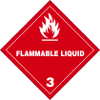
Mercury based pesticides, liquid, flammable, toxic, flash point less than 23 degrees C
HMT 15 June 2026
Reference only — HMT snapshot for inspection and audit support; not a shipping paper, placard mandate, or CVI record.
Use Print / PDF below for field notes.
Mercury based pesticides, liquid, flammable, toxic, flash point less than 23 degrees C
Mercury most commonly refers to: Mercury (planet), the closest planet to the Sun Mercury (element), a chemical element Mercury (mythology), a Roman deity Mercury or The Mercury may also refer to: Wikipedia
×Note: Special provisions may be very complex. The extracts are taken from 49 CFR §172.102. Please be careful with the information, as necessary, additional conditions may be applied that are not written here. Please check the original source and report bugs.
a. The maximum degree of filling must not exceed the degree of filling determined by the following:<br><br>Where: <br>t<sub>r</sub> is the maximum mean bulk temperature during transport, <br>t<sub>f</sub> is the temperature in degrees celsius of the liquid during filling, and <br>α is the mean coefficient of cubical expansion of the liquid between the mean temperature of the liquid during filling (t<sub>f</sub>) and the maximum mean bulk temperature during transportation (t<sub>r</sub>) both in degrees celsius. <br>b. For liquids transported under ambient conditions α may be calculated using the formula:<br><br>Where: <br>d<sub>15</sub> and d<sub>50</sub> are the densities (in units of mass per unit volume) of the liquid at 15 °C (59 °F) and 50 °C (122 °F), respectively.
A portable tank having a minimum test pressure of 4 bar (400 kPa) may be used provided the calculated test pressure is 4 bar or less based on the MAWP of the hazardous material, as defined in § 178.275 of this subchapter, where the test pressure is 1.5 times the MAWP.
(i) The material may be stowed “on deck” or “under deck” on a cargo vessel and on a passenger vessel carrying a number of passengers limited to not more than the larger of 25 passengers, or one passenger per each 3 m of overall vessel length; and
(ii) “On deck only” on passenger vessels in which the number of passengers specified in paragraph (k)(2)(i) of this section is exceeded.
×Note: Special provisions may be very complex. The extracts are taken from 49 CFR §172.102. Please be careful with the information, as necessary, additional conditions may be applied that are not written here. Please check the original source and report bugs.
<sub>Authorized IBCs:</sub> Metal (31A, 31B and 31N); Rigid plastics (31H1 and 31H2); Composite (31HZ1).<br><sub>Additional Requirement:</sub> Only liquids with a vapor pressure less than or equal to 110 kPa at 50 °C (1.1 bar at 122 °F), or 130 kPa at 55 °C (1.3 bar at 131 °F) are authorized.
a. The maximum degree of filling must not exceed the degree of filling determined by the following:<br><br>Where: <br>t<sub>r</sub> is the maximum mean bulk temperature during transport, <br>t<sub>f</sub> is the temperature in degrees celsius of the liquid during filling, and <br>α is the mean coefficient of cubical expansion of the liquid between the mean temperature of the liquid during filling (t<sub>f</sub>) and the maximum mean bulk temperature during transportation (t<sub>r</sub>) both in degrees celsius. <br>b. For liquids transported under ambient conditions α may be calculated using the formula:<br><br>Where: <br>d<sub>15</sub> and d<sub>50</sub> are the densities (in units of mass per unit volume) of the liquid at 15 °C (59 °F) and 50 °C (122 °F), respectively.
A portable tank having a minimum test pressure of 4 bar (400 kPa) may be used provided the calculated test pressure is 4 bar or less based on the MAWP of the hazardous material, as defined in § 178.275 of this subchapter, where the test pressure is 1.5 times the MAWP.
(i) The material may be stowed “on deck” or “under deck” on a cargo vessel and on a passenger vessel carrying a number of passengers limited to not more than the larger of 25 passengers, or one passenger per each 3 m of overall vessel length; and
(ii) “On deck only” on passenger vessels in which the number of passengers specified in paragraph (k)(2)(i) of this section is exceeded.
Multiple packing groups apply to this entry. See assignment criteria in 49 CFR §173 Subpart D. Details are in the tabs above; differences are highlighted.


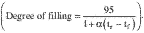 <br>Where: <br>t<sub>r</sub> is the maximum mean bulk temperature during transport, <br>t<sub>f</sub> is the temperature in degrees celsius of the liquid during filling, and <br>α is the mean coefficient of cubical expansion of the liquid between the mean temperature of the liquid during filling (t<sub>f</sub>) and the maximum mean bulk temperature during transportation (t<sub>r</sub>) both in degrees celsius. <br>b. For liquids transported under ambient conditions α may be calculated using the formula:<br>
 <br>Where: <br>d<sub>15</sub> and d<sub>50</sub> are the densities (in units of mass per unit volume) of the liquid at 15 °C (59 °F) and 50 °C (122 °F), respectively.


