Information only — not personal consulting. Verify against current official regulations. Help and scope
HazMat Tool — substance information
Reference only — not a shipping paper, placard mandate, or CVI record.
Detonators, electric for blasting
HMT 15 June 2026
Reference only — HMT snapshot for inspection and audit support; not a shipping paper, placard mandate, or CVI record.
Use Print / PDF below for field notes.
A detonator or blasting cap is a small explosive device or small quantity of explosive, which can be combined with a fuse, used for detonating a larger charge of high explosive. Detonators come in a variety of types, depending on how they are initiated (chemically, mechanically, or electrically) and details of their inner working, which often involve several stages. Types of detonators include non-electric and electric. Non-electric detonators are typically stab or pyrotechnic while electric are typically "hot wire" (low voltage), exploding bridge wire (high voltage) or explosive foil (very high voltage) Wikipedia
Compatibility group of explosives - Description of substances or article to be classified
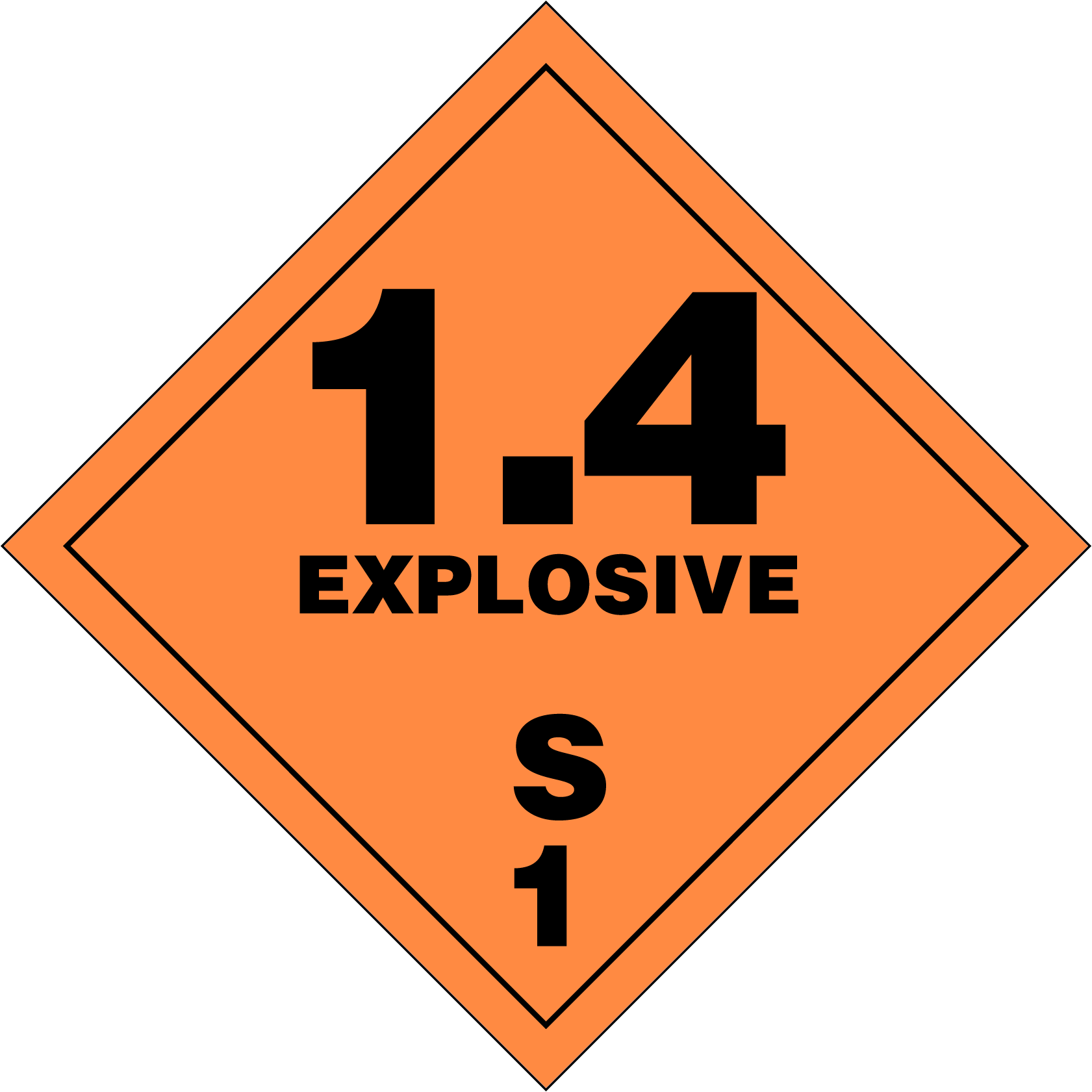
Group: S
Substance or article so packed or designed that any hazardous effects arising from accidental functioning are limited to the extent that they do not significantly hinder or prohibit fire fighting or other emergency response efforts in the immediate vicinity of the package.
×Note: Special provisions may be very complex. The extracts are taken from 49 CFR §172.102. Please be careful with the information, as necessary, additional conditions may be applied that are not written here. Please check the original source and report bugs.
For domestic transportation, this entry directs to § 173.66 of this subchapter for: a. The standards for transporting a single bulk hazardous material for blasting by cargo tank motor vehicles (CTMV); and b. The standards for CTMVs capable of transporting multiple hazardous materials for blasting in bulk and non-bulk packagings (<i>i.e.,</i> a multipurpose bulk truck). Note: “UN3375, Ammonium nitrate emulsion” and “UN0332, Explosive, blasting, type E <i>or</i> Agent blasting, type E” are subject to the United Nations (UN) Test Series 8(d) (UN/SCETDG/55/INF.27) (IBR, see § 171.7 of this subchapter), otherwise known as the Vented Pipe Test (VPT).
Effective July 1, 2011, for transportation by aircraft, this entry may only be used if the results of Test series 6(d) of Part I of the UN Manual of Tests and Criteria (IBR, <i>see</i> § 171.7 of this subchapter) have demonstrated that any hazardous effects from accidental functioning are confined to within the package. Effective January 1, 2012, for transportation by vessel, this entry may only be used if the results of Test Series 6(d) of Part I of the UN Manual of Tests and Criteria (IBR, <i>see</i> § 171.7 of this subchapter) have demonstrated that any hazardous effects from accidental functioning are confined to within the package. Effective January 1, 2014, for transportation domestically by highway or rail, this entry may only be used if the results of Test Series 6(d) of Part I of the UN Manual of Tests and Criteria (IBR, <i>see</i> § 171.7 of this subchapter) have demonstrated that any hazardous effects from accidental functioning are confined to within the package. Testing must be performed or witnessed by a person who is approved by the Associate Administrator (<i>see</i> § 173.56(b) of this subchapter). All successfully conducted tests or reassignment to another compatibility group require the issuance of a new or revised approval by the Associate Administrator prior to transportation on or after the dates specified for each authorized mode of transport in this special provision.
Stowage category “01” means the material may be stowed “on deck” in closed cargo transport units or “under deck” on a cargo vessel (up to 12 passengers) or on a passenger vessel.