HazMat Tool — substance information
Chloroformates, toxic, corrosive, flammable, n.o.s
HMT May 2026Chloroformates, toxic, corrosive, flammable, n.o.s
| Emergency Response Guide No. 155 |
Hazardous Materials Table
Source: 49 CFR §172 (2026/05)(3) Hazard Class6.1Poisonous Material |
(4) Identification number |
(5) Packing Group |
|||||||||
(6) Labels |
|||||||||||
(1) Symbols |
|||||||||||

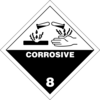
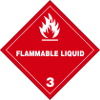
| 5 | |
|---|---|
| IB1 | |
| T7 | |
| TP2 | a. The maximum degree of filling must not exceed the degree of filling determined by the following:  Where: tr is the maximum mean bulk temperature during transport, tf is the temperature in degrees celsius of the liquid during filling, and α is the mean coefficient of cubical expansion of the liquid between the mean temperature of the liquid during filling (tf) and the maximum mean bulk temperature during transportation (tr) both in degrees celsius. b. For liquids transported under ambient conditions α may be calculated using the formula:  Where: d15 and d50 are the densities (in units of mass per unit volume) of the liquid at 15 °C (59 °F) and 50 °C (122 °F), respectively. |
(8) Packing Authorizations (§173.***) 
| (8A) Exceptions | 153 | see 49 CFR §173.153 |
|---|---|---|
| (8B) Non-bulk | 202 | see 49 CFR §173.202 |
| (8C) Bulk | 243 | see 49 CFR §173.243 |
(9) Quantity Limits
| (9A) Passenger aircraft/rail | 1 L |
|---|---|
| (9B) Cargo aircraft only | 30 L |
(10) Vessel stowage
| (10A) Location | |
|---|---|
| (10B) Other |
Segregation chart for load, transport, and storage
This chart shows whether loading, transport, or storage with other hazard classes is permitted, prohibited, or restricted. Based on 49 CFR §177.848.
Note: The HMR prohibit only those Division 6.1 liquids that meet the definition of a Packing Group (PG) I and Hazard Zone A. See special provision 1 and PHMSA Interpretation #09-0252.
Packages with POISON or POISON INHALATION HAZARD labels, or a POISON label displaying “PG III,” or “PG III” marked next to a POISON label may not be transported with foodstuffs, feed or any other edible material, intended for humans or animals. For exceptions see 49 CFR §177.841(e).
Scope & sources (important)Click to show CFR references
This check evaluates segregation per 49 CFR §177.848. Additional loading/unloading and handling requirements may still apply; see 49 CFR §177 Subpart B (Loading and Unloading):
- §177.834 - General requirements
- §177.835 - Class 1 materials
- §177.837 - Class 3 materials
- §177.838 - Class 4 (flammable solid) materials, Class 5 (oxidizing) materials, and Division 4.2 (pyroforic liquid) materials
- §177.839 - Class 8 (corrosive) materials
- §177.840 - Class 2 (gases) materials
- §177.841 - Division 6.1 and Division 2.3 materials
- §177.842 - Class 7 (radioactive) material
- §177.843 - Contamination of vehicles
Similar substances
| UN / ID | Proper shipping name | Hazard class |
|---|---|---|
| UN 3277 | Chloroformates, toxic, corrosive, n.o.s | 6.1 |