HazMat Tool — substance information
Reference only — not a shipping paper, placard mandate, or CVI record.
1,2,3,6-Tetrahydrobenzaldehyde
HMT 15 June 20261,2,3,6-Tetrahydrobenzaldehyde
Substance Data
Source: PubChem (HSDB, 04.12.2019)CAS-Number100-50-5 |
Flash Point— | Boiling Point— |
| Emergency Response Guide No. 129 |
Hazardous Materials Table
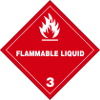
Source: 49 CFR §172 (15 June 2026)(3) Hazard class3Flammable liquids |
(4) Identification number |
(5) Packing Group |
|||||||||
(6) Labels |
|||||||||||
(7) Special Provisions (§172.102)
|
|||||||||||
| B1 | |
|---|---|
| IB3 | |
| T2 | |
| TP1 | The maximum degree of filling must not exceed the degree of filling determined by the following:  Where: tr is the maximum mean bulk temperature during transport, and tf is the temperature in degrees celsius of the liquid during filling. |
(8) Packing Authorizations (§173.***) 
| (8A) Exceptions | 150 | see 49 CFR §173.150 |
|---|---|---|
| (8B) Non-bulk | 203 | see 49 CFR §173.203 |
| (8C) Bulk | 242 | see 49 CFR §173.242 |
(9) Quantity Limits
| (9A) Passenger aircraft/rail | 60 L |
|---|---|
| (9B) Cargo aircraft only | 220 L |
(10) Vessel stowage
| (10A) Location | |
|---|---|
| (10B) Other | — |
(3) Hazard class9Miscellaneous hazardous materials |
(4) Identification number |
(5) Packing Group |
|||||||||
(6) Labels |
|||||||||||
(1) Symbols This entry is signed with plus (+). The plus (+) sign fixes the proper shipping name, hazard class and packing group for that entry without regard to whether the material meets the definition of that class, packing group or any other hazard class definition. When the plus sign is assigned, it means that the material is known to pose a risk to humans. When a plus sign is assigned to mixtures or solutions containing a material where the hazard to humans is significantly different from that of the pure material or where no hazard to humans is posed, the material may be described using an alternative shipping name that represents the hazards posed by the material. An appropriate alternate proper shipping name and hazard class may be authorized by the Associate Administrator. |
|||||||||||

| IB3 | |
|---|---|
| T2 | |
| TP1 | The maximum degree of filling must not exceed the degree of filling determined by the following: Where: tr is the maximum mean bulk temperature during transport, and tf is the temperature in degrees celsius of the liquid during filling. |
(8) Packing Authorizations (§173.***)
| (8A) Exceptions | 155 | see 49 CFR §173.155 |
|---|---|---|
| (8B) Non-bulk | 203 | see 49 CFR §173.203 |
| (8C) Bulk | 241 | see 49 CFR §173.241 |
(9) Quantity Limits
| (9A) Passenger aircraft/rail | 100 L |
|---|---|
| (9B) Cargo aircraft only | 220 L |
(10) Vessel stowage
| (10A) Location | |
|---|---|
| (10B) Other | — |
Packing group comparison
Multiple packing groups apply to this entry. See assignment criteria in 49 CFR §173 Subpart D. Details are in the tabs above; differences are highlighted.
Segregation chart for load, transport, and storage
This chart shows whether loading, transport, or storage with other hazard classes is permitted, prohibited, or restricted. Based on 49 CFR §177.848.
No compatibility information for class 9 in 49 CFR §177.848 included.
Scope & sources (important)Click to show CFR references
This check evaluates segregation per 49 CFR §177.848. Additional loading/unloading and handling requirements may still apply; see 49 CFR §177 Subpart B (Loading and Unloading):
- §177.834 - General requirements
- §177.835 - Class 1 materials
- §177.837 - Class 3 materials
- §177.838 - Class 4 (flammable solid) materials, Class 5 (oxidizing) materials, and Division 4.2 (pyroforic liquid) materials
- §177.839 - Class 8 (corrosive) materials
- §177.840 - Class 2 (gases) materials
- §177.841 - Division 6.1 and Division 2.3 materials
- §177.842 - Class 7 (radioactive) material
- §177.843 - Contamination of vehicles
Similar substances
| UN / ID | Proper shipping name | Hazard class |
|---|---|---|
| UN 2498 | 1,2,3,6-Tetrahydrobenzaldehyde | 3 |