Bombs, smoke, non-explosive, with corrosive liquid, without initiating device
HMT 15 June 2026- UN / ID
- UN 2028
- Hazard class
- 8
- Packing group
- II
- ERG guide
- ERG 153
- Special provisions
- —
- Source
- 49 CFR §172 (15 June 2026)
Bombs, smoke, non-explosive, with corrosive liquid, without initiating device
A bomb is an explosive weapon that uses the exothermic reaction of an explosive material to provide an extremely sudden and violent release of energy. Detonations inflict damage principally through ground- and atmosphere-transmitted mechanical stress, the impact and penetration of pressure-driven projectiles, pressure damage, and explosion-generated effects. Bombs have been utilized since the 11th century starting in East Asia. The term bomb is not usually applied to explosive devices used for civilian purposes such as construction or mining, although the people using the devices may sometimes refer to them as a "bomb" Wikipedia
| Emergency Response Guide No. 153 |
Hazardous Materials Table
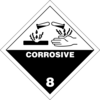
Source: 49 CFR §172 (15 June 2026)(3) Hazard Class8Corrosive liquids |
(4) Identification number |
(5) Packing Group |
|||||||
(6) Labels |
|||||||||
(7) Special Provisions (§172.102)
|
|||||||||
(8) Packing Authorizations (§173.***)
|
|||||||||

| (8A) Exceptions | None | |
|---|---|---|
| (8B) Non-bulk | 160 | see 49 CFR §173.160 |
| (8C) Bulk | None |
(9) Quantity Limits 
| (9A) Passenger aircraft/rail | Forbidden |
|---|---|
| (9B) Cargo aircraft only | 50 kg |
(10) Vessel stowage
| (10A) Location | |
|---|---|
| (10B) Other |
Segregation chart for load, transport, and storage
This chart shows whether loading, transport, or storage with other hazard classes is permitted, prohibited, or restricted. Based on 49 CFR §177.848.
| Hazard class | 8 | 7 | 6.1 | 5.2 | 5.1 | 4.3 | 4.2 | 4.1 | 3 | 2.3B | 2.3A | 2.2 | 2.1 | 1.6 | 1.5 | 1.4 | 1.3 | 1.1/1.2 |
| 1.1/1.2 |  | | | | | | | | | | | | |  | | | | |
| 1.3 | |  | | | | | | | | | | | | | | | | |
| 1.4 | | | | | | | | | | | | | | | | | ||
| 1.5 | | | | | | | | | | | | | | | | |||
| 1.6 | | | | | | | | | | | | | | | ||||
| 2.1 | | | | | | | | | | | | | | |||||
| 2.2 | | | | | | | | | | | | | ||||||
| 2.3A | | | | | | | | | | | | |||||||
| 2.3B | | | | | | | | | | | ||||||||
| 3 | | | | | | | | | | |||||||||
| 4.1 | | | | | | | | | ||||||||||
| 4.2 | | | | | | | | |||||||||||
| 4.3 | | | | | | | ||||||||||||
| 5.1 | | | | | | |||||||||||||
| 5.2 | | | | | ||||||||||||||
| 6.1 | | | | |||||||||||||||
| 7 | | | ||||||||||||||||
| 8 | |
|
Must not be loaded, transported, or stored together in the same vehicle or facility. |
|
May be loaded, transported, or stored together. |
|
May be loaded, transported, or stored together only with restrictions. |
Similar substances
| UN / ID | Proper shipping name | Hazard class |
|---|---|---|
| UN 0190 | Samples, explosive, other than initiating explosives | |
| Initiating explosives (dry) | Forbidden |