HazMat Tool — substance information
Reference only — not a shipping paper, placard mandate, or CVI record.
Carbon monoxide, compressed
HMT 15 June 2026- UN / ID
- UN 1016
- Hazard class
- 2.3
- Packing group
- —
- ERG guide
- ERG 119
- Special provisions
- SP 4
- Source
- 49 CFR §172 (15 June 2026)
Carbon monoxide, compressed
Carbon monoxide (chemical formula CO) is a poisonous, flammable gas that is colorless, odorless, flavorless, and slightly less dense than air. Carbon monoxide consists of one carbon atom and one oxygen atom connected by a triple bond. It is the simplest carbon oxide. In coordination complexes, the carbon monoxide ligand is called carbonyl Wikipedia
Substance Data
Source: PubChem (HSDB, 04.12.2019)CAS-Number630-08-0 |
Flash Point— | Boiling Point— |
| Emergency Response Guide No. 119 |
Hazardous Materials Table
Source: 49 CFR §172 (15 June 2026)(3) Hazard class2.3Poisonous gas |
(4) Identification number |
(5) Packing Group |
||||||||
(6) Labels |
||||||||||
(7) Special Provisions (§172.102)
|
||||||||||
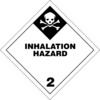
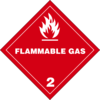

| 4 |
|---|
(8) Packing Authorizations (§173.***) 
| (8A) Exceptions | None | |
|---|---|---|
| (8B) Non-bulk | 302 | see 49 CFR §173.302 |
| (8C) Bulk | 314, 315 | see 49 CFR §173.314, 315 |
(9) Quantity Limits
| (9A) Passenger aircraft/rail | Forbidden |
|---|---|
| (9B) Cargo aircraft only | 25 kg |
(10) Vessel stowage
| (10A) Location | |
|---|---|
| (10B) Other |
Segregation chart for load, transport, and storage
This chart shows whether loading, transport, or storage with other hazard classes is permitted, prohibited, or restricted. Based on 49 CFR §177.848.
Note: In this segregation and separation chart are HazMat of hazard class 2.3 considered depending on their poisonousness by inhalation (Hazard zone A/B). See PHMSA Interpretation #09-0252.
Scope & sources (important)Click to show CFR references
This check evaluates segregation per 49 CFR §177.848. Additional loading/unloading and handling requirements may still apply; see 49 CFR §177 Subpart B (Loading and Unloading):
- §177.834 - General requirements
- §177.835 - Class 1 materials
- §177.837 - Class 3 materials
- §177.838 - Class 4 (flammable solid) materials, Class 5 (oxidizing) materials, and Division 4.2 (pyroforic liquid) materials
- §177.839 - Class 8 (corrosive) materials
- §177.840 - Class 2 (gases) materials
- §177.841 - Division 6.1 and Division 2.3 materials
- §177.842 - Class 7 (radioactive) material
- §177.843 - Contamination of vehicles