Fireworks
HMT 15 June 2026- UN / ID
- UN 0336
- Hazard class
- 1.4G
- Packing group
- n/a (multiple — see tabs)
- ERG guide
- —
- Special provisions
- SP 108, SP 200
- Source
- 49 CFR §172 (15 June 2026)
Fireworks
Fireworks are low explosive pyrotechnic devices used for aesthetic and entertainment purposes. They are most commonly used in fireworks displays (also called a fireworks show or pyrotechnics), combining a large number of devices in an outdoor setting. Such displays are the focal point of many cultural and religious celebrations, though mismanagement can lead to fireworks accidents. Fireworks take many forms to produce four primary effects: noise, light, smoke, and floating materials (confetti most notably). They may be designed to burn with colored flames and sparks including red, orange, yellow, green, blue, purple and silver Wikipedia
Hazardous Materials Table
Source: 49 CFR §172 (15 June 2026)(3) Hazard Class1.4Explosives |
(4) Identification number |
(5) Packing Group |
|||||||
(6) Labels |
|||||||||
(7) Special Provisions (§172.102)
|
|||||||||


| 108 | |
|---|---|
| 200 |
(8) Packing Authorizations (§173.***) 
| (8A) Exceptions | None | |
|---|---|---|
| (8B) Non-bulk | 62 | see 49 CFR §173.62 |
| (8C) Bulk | None |
(9) Quantity Limits
| (9A) Passenger aircraft/rail | Forbidden |
|---|---|
| (9B) Cargo aircraft only | 75 kg |
(10) Vessel stowage
| (10A) Location | |
|---|---|
| (10B) Other |
(3) Hazard Class1.3Explosives |
(4) Identification number |
(5) Packing Group |
|||||||
(6) Labels |
|||||||||
(7) Special Provisions (§172.102)
|
|||||||||

| 108 |
|---|
(8) Packing Authorizations (§173.***)
| (8A) Exceptions | None | |
|---|---|---|
| (8B) Non-bulk | 62 | see 49 CFR §173.62 |
| (8C) Bulk | None |
(9) Quantity Limits
| (9A) Passenger aircraft/rail | Forbidden |
|---|---|
| (9B) Cargo aircraft only | Forbidden |
(10) Vessel stowage
| (10A) Location | |
|---|---|
| (10B) Other |
(3) Hazard Class1.2Explosives |
(4) Identification number |
(5) Packing Group |
|||||||
(6) Labels |
|||||||||
(7) Special Provisions (§172.102)
|
|||||||||

| 108 |
|---|
(8) Packing Authorizations (§173.***)
| (8A) Exceptions | None | |
|---|---|---|
| (8B) Non-bulk | 62 | see 49 CFR §173.62 |
| (8C) Bulk | None |
(9) Quantity Limits
| (9A) Passenger aircraft/rail | Forbidden |
|---|---|
| (9B) Cargo aircraft only | Forbidden |
(10) Vessel stowage
| (10A) Location | |
|---|---|
| (10B) Other |
(3) Hazard Class1.1Explosives |
(4) Identification number |
(5) Packing Group |
|||||||
(6) Labels |
|||||||||
(7) Special Provisions (§172.102)
|
|||||||||

| 108 |
|---|
(8) Packing Authorizations (§173.***)
| (8A) Exceptions | None | |
|---|---|---|
| (8B) Non-bulk | 62 | see 49 CFR §173.62 |
| (8C) Bulk | None |
(9) Quantity Limits
| (9A) Passenger aircraft/rail | Forbidden |
|---|---|
| (9B) Cargo aircraft only | Forbidden |
(10) Vessel stowage
| (10A) Location | |
|---|---|
| (10B) Other |
(3) Hazard Class1.4Explosives |
(4) Identification number |
(5) Packing Group |
|||||||
(6) Labels |
|||||||||
(7) Special Provisions (§172.102)
|
|||||||||
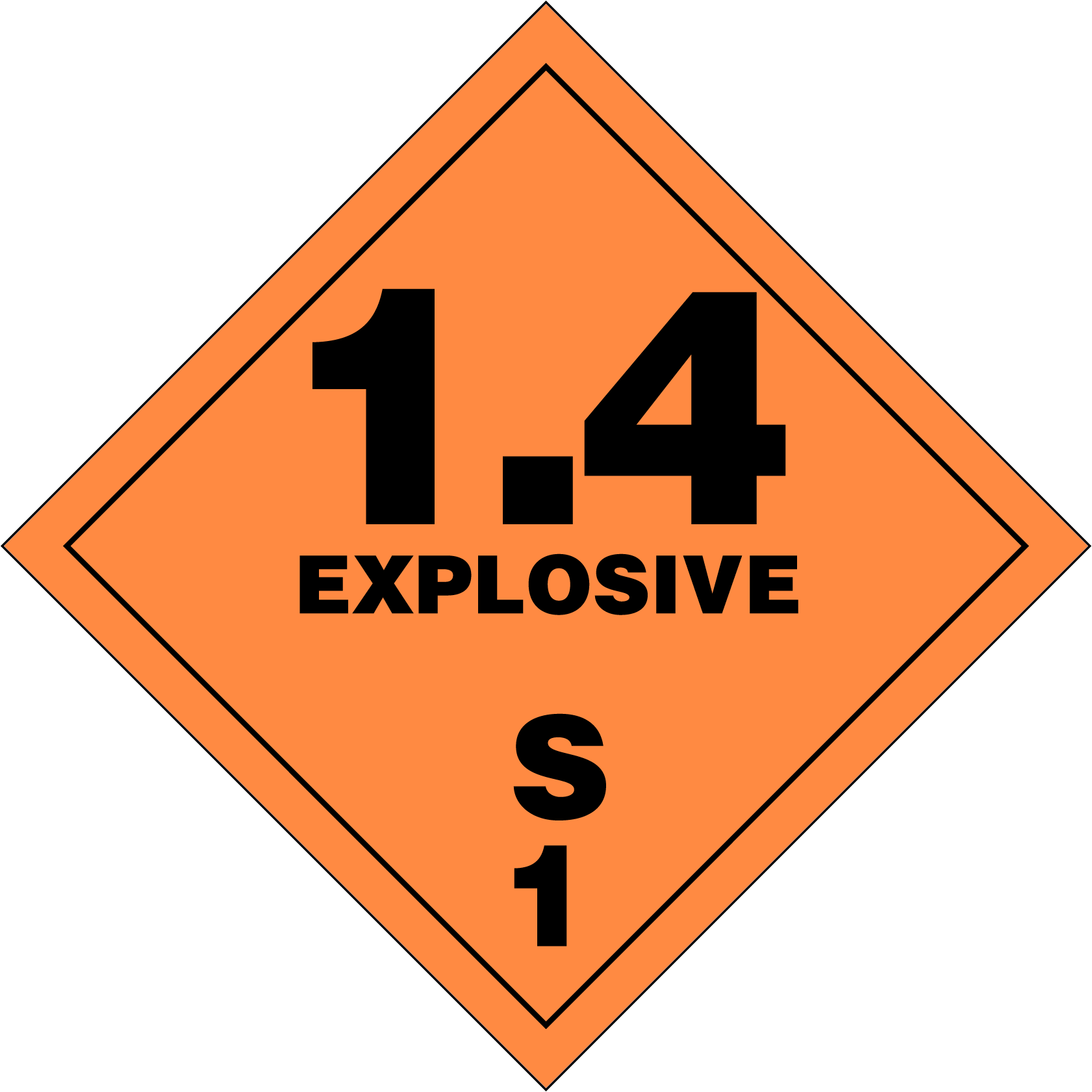
| 108 |
|---|
(8) Packing Authorizations (§173.***)
| (8A) Exceptions | None | |
|---|---|---|
| (8B) Non-bulk | 62 | see 49 CFR §173.62 |
| (8C) Bulk | None |
(9) Quantity Limits
| (9A) Passenger aircraft/rail | 25 kg |
|---|---|
| (9B) Cargo aircraft only | 100 kg |
(10) Vessel stowage
| (10A) Location | |
|---|---|
| (10B) Other |
Packing group comparison
Multiple packing groups apply to this entry. See assignment criteria in 49 CFR §173 Subpart D. Details are in the tabs above; differences are highlighted.
| PG n/a | PG n/a | PG n/a | PG n/a | PG n/a | |
|---|---|---|---|---|---|
| 1 | |||||
| 2 | Fireworks | Fireworks | Fireworks | Fireworks | Fireworks |
| 3 | 1.4G | 1.3G | 1.2G | 1.1G | 1.4S |
| 4 | UN 0336 | UN 0335 | UN 0334 | UN 0333 | UN 0337 |
| 5 | n/a | n/a | n/a | n/a | n/a |
| 6 | 1.4G | 1.3G | 1.2G | 1.1G | 1.4S |
| 7 | 108, 200 | 108 | 108 | 108 | 108 |
| 8A | None | None | None | None | None |
| 8B | 62 | 62 | 62 | 62 | 62 |
| 8C | None | None | None | None | None |
| 9A | Forbidden | Forbidden | Forbidden | Forbidden | 25 kg |
| 9B | 75 kg | Forbidden | Forbidden | Forbidden | 100 kg |
| 10A | 02 | 03 | 03 | 03 | 01 |
| 10B | 25 | 25 | 25 | 25 | 25 |
Segregation chart for load, transport, and storage
This chart shows whether loading, transport, or storage with other hazard classes is permitted, prohibited, or restricted. Based on 49 CFR §177.848.
| Hazard class | 8 | 7 | 6.1 | 5.2 | 5.1 | 4.3 | 4.2 | 4.1 | 3 | 2.3B | 2.3A | 2.2 | 2.1 | 1.6 | 1.5 | 1.4 | 1.3 | 1.1/1.2 |
| 1.1/1.2 |  | | | | | | | | | | | | |  | | | | |
| 1.3 | |  | | | | | | | | | | | | | | | | |
| 1.4 | | | | | | | | | | | | | | | | | ||
| 1.5 | | | | | | | | | | | | | | | | |||
| 1.6 | | | | | | | | | | | | | | | ||||
| 2.1 | | | | | | | | | | | | | | |||||
| 2.2 | | | | | | | | | | | | | ||||||
| 2.3A | | | | | | | | | | | | |||||||
| 2.3B | | | | | | | | | | | ||||||||
| 3 | | | | | | | | | | |||||||||
| 4.1 | | | | | | | | | ||||||||||
| 4.2 | | | | | | | | |||||||||||
| 4.3 | | | | | | | ||||||||||||
| 5.1 | | | | | | |||||||||||||
| 5.2 | | | | | ||||||||||||||
| 6.1 | | | | |||||||||||||||
| 7 | | | ||||||||||||||||
| 8 | |
|
Must not be loaded, transported, or stored together in the same vehicle or facility. |
|
May be loaded, transported, or stored together. |
|
May be loaded, transported, or stored together only with restrictions. |