Methacrylaldehyde, stabilized
Methacrolein, or methacrylaldehyde, is an unsaturated aldehyde. It is a clear, colorless, flammable liquid. Methacrolein is one of two major products resulting from the reaction of isoprene with OH in the atmosphere, the other product being methyl vinyl ketone (MVK, also known as butenone). These compounds are important components of the atmospheric oxidation chemistry of biogenic chemicals, which can result in the formation of ozone and/or particulates Wikipedia
Substance Data
Source:
PubChem (HSDB, 21.10.2026)
CAS-Number78-85-3 |
Flash Point2 ° C | Boiling Point68.4 ° C |
Hazardous Materials Table
Source:
49 CFR §172 (15 June 2026)
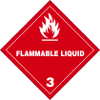
(3) Hazard class 3
Flammable liquids |
UN 2396 |
II |
  |
×Note:Special provisions may be very complex. The extracts are taken from 49 CFR §172.102. Please be careful with the information, as necessary, additional conditions may be applied that are not written here. Please check the original source and report bugs. | 45 | Temperature should be maintained between 18 °C (64.4 °F) and 40 °C (104 °F). Tanks containing solidified methacrylic acid must not be reheated during transport. Browse special provision 45 |
|---|
| 387 | When materials are stabilized by temperature control, the provisions of § 173.21(f) of this subchapter apply. When chemical stabilization is employed, the person offering the material for transport shall ensure that the level of stabilization is sufficient to prevent the material as packaged from dangerous polymerization at 50 °C (122 °F). If chemical stabilization becomes ineffective at lower temperatures within the anticipated duration of transport, temperature control is required in which case transportation is forbidden by aircraft. In making this determination factors to be taken into consideration include, but are not limited to, the capacity and geometry of the packaging and the effect of any insulation present; the temperature of the material when offered for transport; the duration of the journey and the ambient temperature conditions typically encountered in the journey (considering also the season of year); the effectiveness and other properties of the stabilizer employed; applicable operational controls imposed by regulation (<i>e.g.,</i> requirements to protect from sources of heat, including other cargo carried at a temperature above ambient); and any other relevant factors. Browse special provision 387 |
|---|
| IB2 | <sub>Authorized IBCs:</sub> Metal (31A, 31B and 31N); Rigid plastics (31H1 and 31H2); Composite (31HZ1).<br><sub>Additional Requirement:</sub> Only liquids with a vapor pressure less than or equal to 110 kPa at 50 °C (1.1 bar at 122 °F), or 130 kPa at 55 °C (1.3 bar at 131 °F) are authorized. Browse special provision IB2 |
|---|
| T7 | <table class="table table-bordered table-condensed ushmr-sp-table"><tr><th>Minimum test pressure (bar)</th><td>4</td></tr><tr><th>Minimum shell thickness</th><td>§ 178.274(d)(2)</td></tr><tr><th>Pressure-relief requirements</th><td>Normal</td></tr><tr><th>Bottom opening requirements</th><td>§ 178.275(d)(3)</td></tr></table> Browse special provision T7 |
|---|
| TP1 | The maximum degree of filling must not exceed the degree of filling determined by the following:<br> 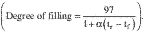 <br>Where: <br>t<sub>r</sub> is the maximum mean bulk temperature during transport, and t<sub>f</sub> is the temperature in degrees celsius of the liquid during filling. Browse special provision TP1 |
|---|
| TP13 | |
|---|
|
|
|
| (9A) Passenger aircraft/rail | 1 L |
|---|
| (9B) Cargo aircraft only | 60 L |
|---|
|
| (10A) Location | D Stowage category “D” means the material must be stowed “on deck only” on a cargo vessel or on a passenger vessel carrying a number of passengers limited to not more than the larger of 25 passengers or one passenger per each 3 m of overall vessel length, but the material is prohibited on a passenger vessel in which the limiting number of passengers is exceeded. Source: 49 CFR §172.101(k) |
|---|
| (10B) Other | |
|---|
|
Segregation chart for load, transport, and storage
This chart shows whether loading, transport, or storage with other hazard classes is permitted, prohibited, or restricted. Based on 49 CFR §177.848.
 |
Must not be loaded, transported, or stored together in the same vehicle or facility. |
 |
May be loaded, transported, or stored together. |
 |
May be loaded, transported, or stored together only with restrictions. |
