Furaldehydes
HMT 15 June 2026- UN / ID
- UN 1199
- Hazard class
- 6.1
- Packing group
- II
- ERG guide
- ERG 132P
- Special provisions
- SP IB2, SP T7, SP TP2
- Source
- 49 CFR §172 (15 June 2026)
Furaldehydes
Formaldehyde ( for-MAL-di-hide, US also fər-) (systematic name methanal) is a pungent colorless gas mainly used in the production of industrial resins, such as for particle board, coatings, plastics, pulp, paper, synthetic fibers, and textiles. A ~5% solution in water of formaldehyde is used as a disinfectant and fumigant in industrial, agricultural, and healthcare settings, and a ~37% solution is used to preserve tissue samples in labs. In 2024, the global production of formaldehyde was estimated at 26 million tons per year, and is a precursor to many other materials and chemical compounds. It is an organic compound with the chemical formula CH2O and structure H2C=O Wikipedia
Substance Data
Source: PubChem (HSDB, 22.10.2026)CAS-Number98-01-1 |
Flash Point60 ° C | Boiling Point161.7 ° C |
| Emergency Response Guide No. 132P |
Hazardous Materials Table
Source: 49 CFR §172 (15 June 2026)(3) Hazard class6.1Poisonous Material |
(4) Identification number |
(5) Packing Group |
|||||||||
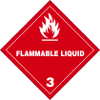
(6) Labels |
|||||||||||
(7) Special Provisions (§172.102)
|
|||||||||||

| IB2 | |
|---|---|
| T7 | |
| TP2 | a. The maximum degree of filling must not exceed the degree of filling determined by the following: 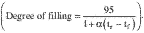 Where: tr is the maximum mean bulk temperature during transport, tf is the temperature in degrees celsius of the liquid during filling, and α is the mean coefficient of cubical expansion of the liquid between the mean temperature of the liquid during filling (tf) and the maximum mean bulk temperature during transportation (tr) both in degrees celsius. b. For liquids transported under ambient conditions α may be calculated using the formula:  Where: d15 and d50 are the densities (in units of mass per unit volume) of the liquid at 15 °C (59 °F) and 50 °C (122 °F), respectively. |
(8) Packing Authorizations (§173.***) 
| (8A) Exceptions | 153 | see 49 CFR §173.153 |
|---|---|---|
| (8B) Non-bulk | 202 | see 49 CFR §173.202 |
| (8C) Bulk | 243 | see 49 CFR §173.243 |
(9) Quantity Limits
| (9A) Passenger aircraft/rail | 5 L |
|---|---|
| (9B) Cargo aircraft only | 60 L |
(10) Vessel stowage
| (10A) Location | |
|---|---|
| (10B) Other | — |
Segregation chart for load, transport, and storage
This chart shows whether loading, transport, or storage with other hazard classes is permitted, prohibited, or restricted. Based on 49 CFR §177.848.
Scope & sources (important)Click to show CFR references
This check evaluates segregation per 49 CFR §177.848. Additional loading/unloading and handling requirements may still apply; see 49 CFR §177 Subpart B (Loading and Unloading):
- §177.834 - General requirements
- §177.835 - Class 1 materials
- §177.837 - Class 3 materials
- §177.838 - Class 4 (flammable solid) materials, Class 5 (oxidizing) materials, and Division 4.2 (pyroforic liquid) materials
- §177.839 - Class 8 (corrosive) materials
- §177.840 - Class 2 (gases) materials
- §177.841 - Division 6.1 and Division 2.3 materials
- §177.842 - Class 7 (radioactive) material
- §177.843 - Contamination of vehicles