Perfumery products with flammable solvents
Perfume ( PUR-fewm, US also pər-FEWM) is a mixture of fragrant essential oils or aroma compounds (fragrances), fixatives and solvents, usually in liquid form, used to give the human body, animals, food, objects, and living-spaces an agreeable scent. Perfumes can be defined as substances that emit and diffuse a pleasant and fragrant odor. They consist of artificial mixtures of aromatic chemicals and essential oils. The 1939 Nobel Laureate for Chemistry, Leopold Ružička stated in 1945 that "right from the earliest days of scientific chemistry up to the present time, perfumes have substantially contributed to the development of organic chemistry as regards methods, systematic classification, and theory." Ancient texts and archaeological excavations show the use of perfumes in some of the earliest human civilizations Wikipedia
Hazardous Materials Table
Source:
49 CFR §172 (15 June 2026)
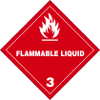
(3) Hazard class 3
Flammable liquids |
UN 1266 |
II |
 |
×Note:Special provisions may be very complex. The extracts are taken from 49 CFR §172.102. Please be careful with the information, as necessary, additional conditions may be applied that are not written here. Please check the original source and report bugs. | 149 | When transported as a limited quantity or a consumer commodity, the maximum net capacity specified in § 173.150(b)(2) of this subchapter for inner packagings may be increased to 5 L (1.3 gallons). Browse special provision 149 |
|---|
| IB2 | Authorized IBCs: Metal (31A, 31B and 31N); Rigid plastics (31H1 and 31H2); Composite (31HZ1). Additional Requirement: Only liquids with a vapor pressure less than or equal to 110 kPa at 50 °C (1.1 bar at 122 °F), or 130 kPa at 55 °C (1.3 bar at 131 °F) are authorized. Browse special provision IB2 |
|---|
| T4 | | Minimum test pressure (bar) | 2.65 |
|---|
| Minimum shell thickness | § 178.274(d)(2) |
|---|
| Pressure-relief requirements | Normal |
|---|
| Bottom opening requirements | § 178.275(d)(3) |
|---|
Browse special provision T4 |
|---|
| TP1 | The maximum degree of filling must not exceed the degree of filling determined by the following: 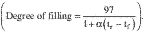 Where: t r is the maximum mean bulk temperature during transport, and t f is the temperature in degrees celsius of the liquid during filling. Browse special provision TP1 |
|---|
| TP8 | A portable tank having a minimum test pressure of 1.5 bar (150 kPa) may be used when the flash point of the hazardous material transported is greater than 0 °C (32 °F). Browse special provision TP8 |
|---|
|
|
|
| (9A) Passenger aircraft/rail | 15 L |
|---|
| (9B) Cargo aircraft only | 60 L |
|---|
|
| (10A) Location | B Stowage category “B” means - (i) The material may be stowed “on deck” or “under deck” on a cargo vessel and on a passenger vessel carrying a number of passengers limited to not more than the larger of 25 passengers, or one passenger per each 3 m of overall vessel length; and
- (ii) “On deck only” on passenger vessels in which the number of passengers specified in paragraph (k)(2)(i) of this section is exceeded.
Source: 49 CFR §172.101(k) |
|---|
| (10B) Other | — |
|---|
|
(3) Hazard class 3
Flammable liquids |
UN 1266 |
III |
| |
×Note:Special provisions may be very complex. The extracts are taken from 49 CFR §172.102. Please be careful with the information, as necessary, additional conditions may be applied that are not written here. Please check the original source and report bugs. | B1 | If the material has a flash point at or above 38 °C (100 °F) and below 93 °C (200 °F), then the bulk packaging requirements of § 173.241 of this subchapter are applicable. If the material has a flash point of less than 38 °C (100 °F), then the bulk packaging requirements of § 173.242 of this subchapter are applicable. Browse special provision B1 |
|---|
| IB3 | Authorized IBCs: Metal (31A, 31B and 31N); Rigid plastics (31H1 and 31H2); Composite (31HZ1 and 31HA2, 31HB2, 31HN2, 31HD2 and 31HH2). Additional Requirement: Only liquids with a vapor pressure less than or equal to 110 kPa at 50 °C (1.1 bar at 122 °F), or 130 kPa at 55 °C (1.3 bar at 131 °F) are authorized, except for UN2672 (also see special provision IP8 in Table 2 for UN2672). Browse special provision IB3 |
|---|
| T2 | | Minimum test pressure (bar) | 1.5 |
|---|
| Minimum shell thickness | § 178.274(d)(2) |
|---|
| Pressure-relief requirements | Normal |
|---|
| Bottom opening requirements | § 178.275(d)(3) |
|---|
Browse special provision T2 |
|---|
| TP1 | The maximum degree of filling must not exceed the degree of filling determined by the following: Where: t r is the maximum mean bulk temperature during transport, and t f is the temperature in degrees celsius of the liquid during filling. Browse special provision TP1 |
|---|
|
|
|
| (9A) Passenger aircraft/rail | 60 L |
|---|
| (9B) Cargo aircraft only | 220 L |
|---|
|
| (10A) Location | A Stowage category “A” means the material may be stowed “on deck” or “under deck” on a cargo vessel or on a passenger vessel. Source: 49 CFR §172.101(k) |
|---|
| (10B) Other | — |
|---|
|
Packing group comparison
Multiple packing groups apply to this entry. See assignment criteria in 49 CFR §173 Subpart D. Details are in the tabs above; differences are highlighted.
| PG II | PG III |
|---|
| 1 | | |
| 2 | Perfumery products with flammable solvents | Perfumery products with flammable solvents |
| 3 | 3 | 3 |
| 4 | UN 1266 | UN 1266 |
| 5 | II | III |
| 6 | 3 | 3 |
| 7 | 149, IB2, T4, TP1, TP8 | B1, IB3, T2, TP1 |
| 8A | 150 | 150 |
| 8B | 202 | 203 |
| 8C | 242 | 242 |
| 9A | 15 L | 60 L |
| 9B | 60 L | 220 L |
| 10A | B | A |
| 10B | — | — |
Segregation chart for load, transport, and storage
This chart shows whether loading, transport, or storage with other hazard classes is permitted, prohibited, or restricted. Based on 49 CFR §177.848.
 |
Must not be loaded, transported, or stored together in the same vehicle or facility. |
 |
May be loaded, transported, or stored together. |
 |
May be loaded, transported, or stored together only with restrictions. |
