Allyl iodide
Allyl iodide (3-iodopropene) is an organic halide used in synthesis of other organic compounds such as N-alkyl-2-pyrrolidones, sorbic acid esters, 5,5-disubstituted barbituric acids, and organometallic catalysts. Allyl iodide can be synthesized from allyl alcohol and methyl iodide on triphenyl phosphite, Finkelstein reaction on allyl halides, or by the action of elemental phosphorus and iodine on glycerol. Allyl iodide dissolved in hexane can be stored for up to three months in a dark freezer at −5 °C (23 °F) before decomposition into free iodine becomes apparent Wikipedia
Hazardous Materials Table
Source:
49 CFR §172 (15 June 2026)
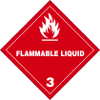
(3) Hazard class 3
Flammable liquids |
UN 1723 |
II |
  |
×Note:Special provisions may be very complex. The extracts are taken from 49 CFR §172.102. Please be careful with the information, as necessary, additional conditions may be applied that are not written here. Please check the original source and report bugs. | A3 | For combination packagings, if glass inner packagings (including ampoules) are used, they must be packed with absorbent material in tightly closed rigid and leakproof receptacles before packing in outer packagings. Browse special provision A3 |
|---|
| IB1 | <sub>Authorized IBCs:</sub> Metal (31A, 31B and 31N).<br><sub>Additional Requirement:</sub> Only liquids with a vapor pressure less than or equal to 110 kPa at 50 °C (1.1 bar at 122 °F), or 130 kPa at 55 °C (1.3 bar at 131 °F) are authorized. Browse special provision IB1 |
|---|
| N34 | Aluminum construction materials are not authorized for any part of a packaging which is normally in contact with the hazardous material. Browse special provision N34 |
|---|
| T7 | <table class="table table-bordered table-condensed ushmr-sp-table"><tr><th>Minimum test pressure (bar)</th><td>4</td></tr><tr><th>Minimum shell thickness</th><td>§ 178.274(d)(2)</td></tr><tr><th>Pressure-relief requirements</th><td>Normal</td></tr><tr><th>Bottom opening requirements</th><td>§ 178.275(d)(3)</td></tr></table> Browse special provision T7 |
|---|
| TP2 | a. The maximum degree of filling must not exceed the degree of filling determined by the following:<br> 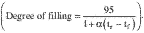 <br>Where: <br>t<sub>r</sub> is the maximum mean bulk temperature during transport, <br>t<sub>f</sub> is the temperature in degrees celsius of the liquid during filling, and <br>α is the mean coefficient of cubical expansion of the liquid between the mean temperature of the liquid during filling (t<sub>f</sub>) and the maximum mean bulk temperature during transportation (t<sub>r</sub>) both in degrees celsius. <br>b. For liquids transported under ambient conditions α may be calculated using the formula:<br>  <br>Where: <br>d<sub>15</sub> and d<sub>50</sub> are the densities (in units of mass per unit volume) of the liquid at 15 °C (59 °F) and 50 °C (122 °F), respectively. Browse special provision TP2 |
|---|
| TP13 | |
|---|
|
|
|
| (9A) Passenger aircraft/rail | 1 L |
|---|
| (9B) Cargo aircraft only | 5 L |
|---|
|
| (10A) Location | B Stowage category “B” means - (i) The material may be stowed “on deck” or “under deck” on a cargo vessel and on a passenger vessel carrying a number of passengers limited to not more than the larger of 25 passengers, or one passenger per each 3 m of overall vessel length; and
- (ii) “On deck only” on passenger vessels in which the number of passengers specified in paragraph (k)(2)(i) of this section is exceeded.
Source: 49 CFR §172.101(k) |
|---|
| (10B) Other | |
|---|
|
Segregation chart for load, transport, and storage
This chart shows whether loading, transport, or storage with other hazard classes is permitted, prohibited, or restricted. Based on 49 CFR §177.848.
 |
Must not be loaded, transported, or stored together in the same vehicle or facility. |
 |
May be loaded, transported, or stored together. |
 |
May be loaded, transported, or stored together only with restrictions. |
