HazMat Tool — substance information
Sulfuryl chloride
HMT 15 June 2026Sulfuryl chloride
Sulfuryl chloride is an inorganic compound with the formula SO2Cl2. At room temperature, it is a colorless liquid with a pungent odor. Sulfuryl chloride is not found in nature. Sulfuryl chloride is commonly confused with thionyl chloride, SOCl2. The properties of these two sulfur oxychlorides are quite different: sulfuryl chloride is a source of chlorine whereas thionyl chloride is a source of chloride ions Wikipedia
Substance Data
Source: PubChemCAS-Number7791-25-5 |
Flash Pointn/a | Boiling Pointn/a |
| Emergency Response Guide No. 137 |
Hazardous Materials Table
Source: 49 CFR §172 (15 June 2026)(3) Hazard Class6.1Poisonous Material |
(4) Identification number |
(5) Packing Group |
||||||||||||||||||||||||||
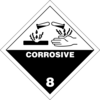
(6) Labels |
||||||||||||||||||||||||||||
(1) Symbols This entry is signed with plus (+). The plus (+) sign fixes the proper shipping name, hazard class and packing group for that entry without regard to whether the material meets the definition of that class, packing group or any other hazard class definition. When the plus sign is assigned, it means that the material is known to pose a risk to humans. When a plus sign is assigned to mixtures or solutions containing a material where the hazard to humans is significantly different from that of the pure material or where no hazard to humans is posed, the material may be described using an alternative shipping name that represents the hazards posed by the material. An appropriate alternate proper shipping name and hazard class may be authorized by the Associate Administrator. |
||||||||||||||||||||||||||||

| 1 | |
|---|---|
| B6 | |
| B9 | |
| B10 | |
| B14 | |
| B30 | |
| B77 | |
| N34 | |
| T22 | |
| TP2 | a. The maximum degree of filling must not exceed the degree of filling determined by the following:  Where: tr is the maximum mean bulk temperature during transport, tf is the temperature in degrees celsius of the liquid during filling, and α is the mean coefficient of cubical expansion of the liquid between the mean temperature of the liquid during filling (tf) and the maximum mean bulk temperature during transportation (tr) both in degrees celsius. b. For liquids transported under ambient conditions α may be calculated using the formula:  Where: d15 and d50 are the densities (in units of mass per unit volume) of the liquid at 15 °C (59 °F) and 50 °C (122 °F), respectively. |
| TP13 | |
| TP38 | |
| TP44 |
(8) Packing Authorizations (§173.***) 
| (8A) Exceptions | None | |
|---|---|---|
| (8B) Non-bulk | 226 | see 49 CFR §173.226 |
| (8C) Bulk | 244 | see 49 CFR §173.244 |
(9) Quantity Limits
| (9A) Passenger aircraft/rail | Forbidden |
|---|---|
| (9B) Cargo aircraft only | Forbidden |
(10) Vessel stowage
| (10A) Location | |
|---|---|
| (10B) Other |
Segregation chart for load, transport, and storage
This chart shows whether loading, transport, or storage with other hazard classes is permitted, prohibited, or restricted. Based on 49 CFR §177.848.
Note: The HMR prohibit only those Division 6.1 liquids that meet the definition of a Packing Group (PG) I and Hazard Zone A. See special provision 1 and PHMSA Interpretation #09-0252.
Packages with POISON or POISON INHALATION HAZARD labels, or a POISON label displaying “PG III,” or “PG III” marked next to a POISON label may not be transported with foodstuffs, feed or any other edible material, intended for humans or animals. For exceptions see 49 CFR §177.841(e).
Currently HazMat Tool is not able to to check if a HazMat is liquid or not. Therefore it is assumed as liquid.
| Hazard class | 8 | 7 | 6.1 | 5.2 | 5.1 | 4.3 | 4.2 | 4.1 | 3 | 2.3B | 2.3A | 2.2 | 2.1 | 1.6 | 1.5 | 1.4 | 1.3 | 1.1/1.2 |
| 1.1/1.2 |  | | | | | | | | | | | | |  | | | | |
| 1.3 | |  | | | | | | | | | | | | | | | | |
| 1.4 | | | | | | | | | | | | | | | | | ||
| 1.5 | | | | | | | | | | | | | | | | |||
| 1.6 | | | | | | | | | | | | | | | ||||
| 2.1 | | | | | | | | | | | | | | |||||
| 2.2 | | | | | | | | | | | | | ||||||
| 2.3A | | | | | | | | | | | | |||||||
| 2.3B | | | | | | | | | | | ||||||||
| 3 | | | | | | | | | | |||||||||
| 4.1 | | | | | | | | | ||||||||||
| 4.2 | | | | | | | | |||||||||||
| 4.3 | | | | | | | ||||||||||||
| 5.1 | | | | | | |||||||||||||
| 5.2 | | | | | ||||||||||||||
| 6.1 | | | | |||||||||||||||
| 7 | | | ||||||||||||||||
| 8 | |
|
Must not be loaded, transported, or stored together in the same vehicle or facility. |
|
May be loaded, transported, or stored together. |
|
May be loaded, transported, or stored together only with restrictions. |
Similar substances
| UN / ID | Proper shipping name | Hazard class |
|---|---|---|
| UN 1817 | Pyrosulfuryl chloride | 8 |
| UN 2191 | Sulfuryl fluoride | 2.3 |