Fuel, aviation, turbine engine
HMT 15 June 2026Fuel, aviation, turbine engine
Fuel are any materials that can react with other substances to release energy as thermal energy or to be used for work. The concept was originally applied solely to those materials capable of releasing chemical energy but has since also been applied to other sources of heat energy, such as nuclear energy (via nuclear fission and nuclear fusion). The heat energy released by reactions of fuels can be converted into mechanical energy via a heat engine. Other times, the heat itself is valued for warmth, cooking, or industrial processes, as well as the illumination that accompanies combustion. Fuels are also used in the cells of organisms in a process known as cellular respiration, where organic molecules are oxidized to release usable energy Wikipedia
| Emergency Response Guide No. 128 |
Hazardous Materials Table
Source: 49 CFR §172 (15 June 2026)(3) Hazard Class3Flammable liquids |
(4) Identification number |
(5) Packing Group |
||||||||||
(6) Labels |
||||||||||||
(7) Special Provisions (§172.102)
|
||||||||||||
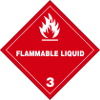
| 144 | |
|---|---|
| T11 | |
| TP1 | The maximum degree of filling must not exceed the degree of filling determined by the following:  Where: tr is the maximum mean bulk temperature during transport, and tf is the temperature in degrees celsius of the liquid during filling. |
| TP8 | |
| TP28 |
(8) Packing Authorizations (§173.***) 
| (8A) Exceptions | 150 | see 49 CFR §173.150 |
|---|---|---|
| (8B) Non-bulk | 201 | see 49 CFR §173.201 |
| (8C) Bulk | 243 | see 49 CFR §173.243 |
(9) Quantity Limits
| (9A) Passenger aircraft/rail | 1 L |
|---|---|
| (9B) Cargo aircraft only | 30 L |
(10) Vessel stowage
| (10A) Location | |
|---|---|
| (10B) Other | n/a |
(3) Hazard Class3Flammable liquids |
(4) Identification number |
(5) Packing Group |
||||||||||
(6) Labels |
||||||||||||
(7) Special Provisions (§172.102)
|
||||||||||||
| 144 | |
|---|---|
| IB2 | |
| T4 | |
| TP1 | The maximum degree of filling must not exceed the degree of filling determined by the following: Where: tr is the maximum mean bulk temperature during transport, and tf is the temperature in degrees celsius of the liquid during filling. |
| TP8 |
(8) Packing Authorizations (§173.***)
| (8A) Exceptions | 150 | see 49 CFR §173.150 |
|---|---|---|
| (8B) Non-bulk | 202 | see 49 CFR §173.202 |
| (8C) Bulk | 242 | see 49 CFR §173.242 |
(9) Quantity Limits
| (9A) Passenger aircraft/rail | 5 L |
|---|---|
| (9B) Cargo aircraft only | 60 L |
(10) Vessel stowage
| (10A) Location | |
|---|---|
| (10B) Other | n/a |
(3) Hazard Class3Flammable liquids |
(4) Identification number |
(5) Packing Group |
||||||||||
(6) Labels |
||||||||||||
(7) Special Provisions (§172.102)
|
||||||||||||
| 144 | |
|---|---|
| B1 | |
| IB3 | |
| T2 | |
| TP1 | The maximum degree of filling must not exceed the degree of filling determined by the following: Where: tr is the maximum mean bulk temperature during transport, and tf is the temperature in degrees celsius of the liquid during filling. |
(8) Packing Authorizations (§173.***)
| (8A) Exceptions | 150 | see 49 CFR §173.150 |
|---|---|---|
| (8B) Non-bulk | 203 | see 49 CFR §173.203 |
| (8C) Bulk | 242 | see 49 CFR §173.242 |
(9) Quantity Limits
| (9A) Passenger aircraft/rail | 60 L |
|---|---|
| (9B) Cargo aircraft only | 220 L |
(10) Vessel stowage
| (10A) Location | |
|---|---|
| (10B) Other | n/a |
Packing group comparison
Multiple packing groups apply to this entry. See assignment criteria in 49 CFR §173 Subpart D. Details are in the tabs above; differences are highlighted.
Segregation chart for load, transport, and storage
This chart shows whether loading, transport, or storage with other hazard classes is permitted, prohibited, or restricted. Based on 49 CFR §177.848.
| Hazard class | 8 | 7 | 6.1 | 5.2 | 5.1 | 4.3 | 4.2 | 4.1 | 3 | 2.3B | 2.3A | 2.2 | 2.1 | 1.6 | 1.5 | 1.4 | 1.3 | 1.1/1.2 |
| 1.1/1.2 |  | | | | | | | | | | | | |  | | | | |
| 1.3 | |  | | | | | | | | | | | | | | | | |
| 1.4 | | | | | | | | | | | | | | | | | ||
| 1.5 | | | | | | | | | | | | | | | | |||
| 1.6 | | | | | | | | | | | | | | | ||||
| 2.1 | | | | | | | | | | | | | | |||||
| 2.2 | | | | | | | | | | | | | ||||||
| 2.3A | | | | | | | | | | | | |||||||
| 2.3B | | | | | | | | | | | ||||||||
| 3 | | | | | | | | | | |||||||||
| 4.1 | | | | | | | | | ||||||||||
| 4.2 | | | | | | | | |||||||||||
| 4.3 | | | | | | | ||||||||||||
| 5.1 | | | | | | |||||||||||||
| 5.2 | | | | | ||||||||||||||
| 6.1 | | | | |||||||||||||||
| 7 | | | ||||||||||||||||
| 8 | |
|
Must not be loaded, transported, or stored together in the same vehicle or facility. |
|
May be loaded, transported, or stored together. |
|
May be loaded, transported, or stored together only with restrictions. |