Bisulfites, aqueous solutions, n.o.s.
Bisulfite sequencing (also known as bisulphite sequencing) is the use of bisulfite treatment of DNA before routine sequencing to determine the pattern of methylation. DNA methylation was the first discovered epigenetic mark, and remains the most studied. In animals it predominantly involves the addition of a methyl group to the carbon-5 position of cytosine residues of the dinucleotide CpG, and is implicated in repression of transcriptional activity. Treatment of DNA with bisulfite converts cytosine residues to uracil, but leaves 5-methylcytosine residues unaffected Wikipedia
Hazardous Materials Table
Source:
49 CFR §172 (15 June 2026)
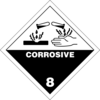
(3) Hazard class 8
Corrosive liquids |
UN 2693 |
III |
 |
×Note:Special provisions may be very complex. The extracts are taken from 49 CFR §172.102. Please be careful with the information, as necessary, additional conditions may be applied that are not written here. Please check the original source and report bugs. | IB3 | <sub>Authorized IBCs:</sub> Metal (31A, 31B and 31N); Rigid plastics (31H1 and 31H2); Composite (31HZ1 and 31HA2, 31HB2, 31HN2, 31HD2 and 31HH2).<br><sub>Additional Requirement:</sub> Only liquids with a vapor pressure less than or equal to 110 kPa at 50 °C (1.1 bar at 122 °F), or 130 kPa at 55 °C (1.3 bar at 131 °F) are authorized, except for UN2672 (also see special provision IP8 in Table 2 for UN2672). Browse special provision IB3 |
|---|
| T7 | <table class="table table-bordered table-condensed ushmr-sp-table"><tr><th>Minimum test pressure (bar)</th><td>4</td></tr><tr><th>Minimum shell thickness</th><td>§ 178.274(d)(2)</td></tr><tr><th>Pressure-relief requirements</th><td>Normal</td></tr><tr><th>Bottom opening requirements</th><td>§ 178.275(d)(3)</td></tr></table> Browse special provision T7 |
|---|
| TP1 | The maximum degree of filling must not exceed the degree of filling determined by the following:<br> 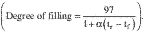 <br>Where: <br>t<sub>r</sub> is the maximum mean bulk temperature during transport, and t<sub>f</sub> is the temperature in degrees celsius of the liquid during filling. Browse special provision TP1 |
|---|
| TP28 | A portable tank having a minimum test pressure of 2.65 bar (265 kPa) may be used provided the calculated test pressure is 2.65 bar or less based on the MAWP of the hazardous material, as defined in § 178.275 of this subchapter, where the test pressure is 1.5 times the MAWP. Browse special provision TP28 |
|---|
|
|
|
| (9A) Passenger aircraft/rail | 5 L |
|---|
| (9B) Cargo aircraft only | 60 L |
|---|
|
| (10A) Location | A Stowage category “A” means the material may be stowed “on deck” or “under deck” on a cargo vessel or on a passenger vessel. Source: 49 CFR §172.101(k) |
|---|
| (10B) Other | |
|---|
|
Segregation chart for load, transport, and storage
This chart shows whether loading, transport, or storage with other hazard classes is permitted, prohibited, or restricted. Based on 49 CFR §177.848.
Hinweis: In der Kompatibilitätstabelle sind Stoffe der Gefahrenklasse 8 nur dann zu berücksichtigen, wenn der Stoff flüssig ist. Derzeit kann
HazMat Tool nicht prüfen, ob der Stoff flüssig ist. Dies wird daher hier angenommen. Siehe
PHMSA Interpretation #09-0252.
 |
Must not be loaded, transported, or stored together in the same vehicle or facility. |
 |
May be loaded, transported, or stored together. |
 |
May be loaded, transported, or stored together only with restrictions. |
