Lithium ion batteries including lithium ion polymer batteries
HMT 15 June 2026- UN / ID
- UN 3480
- Hazard class
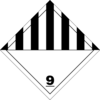
- 9
- Packing group
- —
- ERG guide
- ERG 147
- Special provisions
- Source
- 49 CFR §172 (15 June 2026)
| UN | Role | Chemistry | Packaging | Class | Special provisions |
|---|---|---|---|---|---|
| UN3480 this entry | Lithium ion batteries (cells / batteries alone) | Li-ion | Standalone | 9 | |
| UN3481 | Lithium ion batteries packed with / contained in equipment | Li-ion | With or in equipment | 9 | |
| UN3090 | Lithium metal batteries (cells / batteries alone) | Li-metal | Standalone | 9 | |
| UN3091 | Lithium metal batteries packed with / contained in equipment | Li-metal | With or in equipment | 9 |
Lithium guide & assistant Open in Load Inspector Segregation check
Not sure which UN? Use the lithium assistant. Confirm packing instruction / mode of transport against the current 49 CFR before shipping.
Lithium ion batteries including lithium ion polymer batteries
Lithium (from Ancient Greek: λίθος, líthos, 'stone') is a chemical element; it has symbol Li and atomic number 3. It is a soft, silvery-white alkali metal. Under standard conditions, it is the least dense metal and the least dense solid element. Like all alkali metals, lithium is highly reactive and flammable, and must be stored in vacuum, inert atmosphere, or inert liquid such as purified kerosene or mineral oil Wikipedia
| Emergency Response Guide No. 147 |
Hazardous Materials Table
Source: 49 CFR §172 (15 June 2026)(3) Hazard class9Miscellaneous hazardous materials |
(4) Identification number |
(5) Packing Group |
|||||||||
(6) Labels |
|||||||||||
(7) Special Provisions (§172.102)
|
|||||||||||

| 388 | |
|---|---|
| 422 | |
| A54 | |
| A100 |
(8) Packing Authorizations (§173.***) 
| (8A) Exceptions | 185 | see 49 CFR §173.185 |
|---|---|---|
| (8B) Non-bulk | 185 | see 49 CFR §173.185 |
| (8C) Bulk | 185 | see 49 CFR §173.185 |
(9) Quantity Limits
| (9A) Passenger aircraft/rail | Forbidden |
|---|---|
| (9B) Cargo aircraft only | 35 kg |
(10) Vessel stowage
| (10A) Location | |
|---|---|
| (10B) Other |
Segregation chart for load, transport, and storage
This chart shows whether loading, transport, or storage with other hazard classes is permitted, prohibited, or restricted. Based on 49 CFR §177.848.
Keine Kompatibilitätsangaben für Klasse 9 in 49 CFR §177.848 enthalten.
Scope & sources (important)Click to show CFR references
This check evaluates segregation per 49 CFR §177.848. Additional loading/unloading and handling requirements may still apply; see 49 CFR §177 Subpart B (Loading and Unloading):
- §177.834 - General requirements
- §177.835 - Class 1 materials
- §177.837 - Class 3 materials
- §177.838 - Class 4 (flammable solid) materials, Class 5 (oxidizing) materials, and Division 4.2 (pyroforic liquid) materials
- §177.839 - Class 8 (corrosive) materials
- §177.840 - Class 2 (gases) materials
- §177.841 - Division 6.1 and Division 2.3 materials
- §177.842 - Class 7 (radioactive) material
- §177.843 - Contamination of vehicles