Detonators for ammunition
HMT 15 June 2026- UN / ID
- UN 0365
- Hazard class
- 1.4B
- Packing group
- n/a (multiple — see tabs)
- ERG guide
- —
- Special provisions
- —
- Source
- 49 CFR §172 (15 June 2026)
Detonators for ammunition
A detonator or blasting cap is a small explosive device or small quantity of explosive, which can be combined with a fuse, used for detonating a larger charge of high explosive. Detonators come in a variety of types, depending on how they are initiated (chemically, mechanically, or electrically) and details of their inner working, which often involve several stages. Types of detonators include non-electric and electric. Non-electric detonators are typically stab or pyrotechnic while electric are typically "hot wire" (low voltage), exploding bridge wire (high voltage) or explosive foil (very high voltage) Wikipedia
Hazardous Materials Table
Source: 49 CFR §172 (15 June 2026)(3) Hazard Class1.4Explosives |
(4) Identification number |
(5) Packing Group |
|||||||
(6) Labels |
|||||||||
(7) Special Provisions (§172.102)
|
|||||||||
(8) Packing Authorizations (§173.***)
|
|||||||||


| (8A) Exceptions | None | |
|---|---|---|
| (8B) Non-bulk | 62 | see 49 CFR §173.62 |
| (8C) Bulk | None |
(9) Quantity Limits 
| (9A) Passenger aircraft/rail | Forbidden |
|---|---|
| (9B) Cargo aircraft only | 75 kg |
(10) Vessel stowage
| (10A) Location | |
|---|---|
| (10B) Other |
(3) Hazard Class1.4Explosives |
(4) Identification number |
(5) Packing Group |
|||||||
(6) Labels |
|||||||||
(7) Special Provisions (§172.102)
|
|||||||||
| 347 |
|---|
(8) Packing Authorizations (§173.***)
| (8A) Exceptions | None | |
|---|---|---|
| (8B) Non-bulk | 62 | see 49 CFR §173.62 |
| (8C) Bulk | None |
(9) Quantity Limits
| (9A) Passenger aircraft/rail | 25 kg |
|---|---|
| (9B) Cargo aircraft only | 100 kg |
(10) Vessel stowage
| (10A) Location | |
|---|---|
| (10B) Other |
(3) Hazard Class1.2Explosives |
(4) Identification number |
(5) Packing Group |
|||||||
(6) Labels |
|||||||||
(7) Special Provisions (§172.102)
|
|||||||||
(8) Packing Authorizations (§173.***)
|
|||||||||

| (8A) Exceptions | None | |
|---|---|---|
| (8B) Non-bulk | 62 | see 49 CFR §173.62 |
| (8C) Bulk | None |
(9) Quantity Limits
| (9A) Passenger aircraft/rail | Forbidden |
|---|---|
| (9B) Cargo aircraft only | Forbidden |
(10) Vessel stowage
| (10A) Location | |
|---|---|
| (10B) Other |
(3) Hazard Class1.1Explosives |
(4) Identification number |
(5) Packing Group |
|||||||
(6) Labels |
|||||||||
(7) Special Provisions (§172.102)
|
|||||||||
(8) Packing Authorizations (§173.***)
|
|||||||||

| (8A) Exceptions | None | |
|---|---|---|
| (8B) Non-bulk | 62 | see 49 CFR §173.62 |
| (8C) Bulk | None |
(9) Quantity Limits
| (9A) Passenger aircraft/rail | Forbidden |
|---|---|
| (9B) Cargo aircraft only | Forbidden |
(10) Vessel stowage
| (10A) Location | |
|---|---|
| (10B) Other |
Packing group comparison
Multiple packing groups apply to this entry. See assignment criteria in 49 CFR §173 Subpart D. Details are in the tabs above; differences are highlighted.
| PG n/a | PG n/a | PG n/a | PG n/a | |
|---|---|---|---|---|
| 1 | ||||
| 2 | Detonators for ammunition | Detonators for ammunition | Detonators for ammunition | Detonators for ammunition |
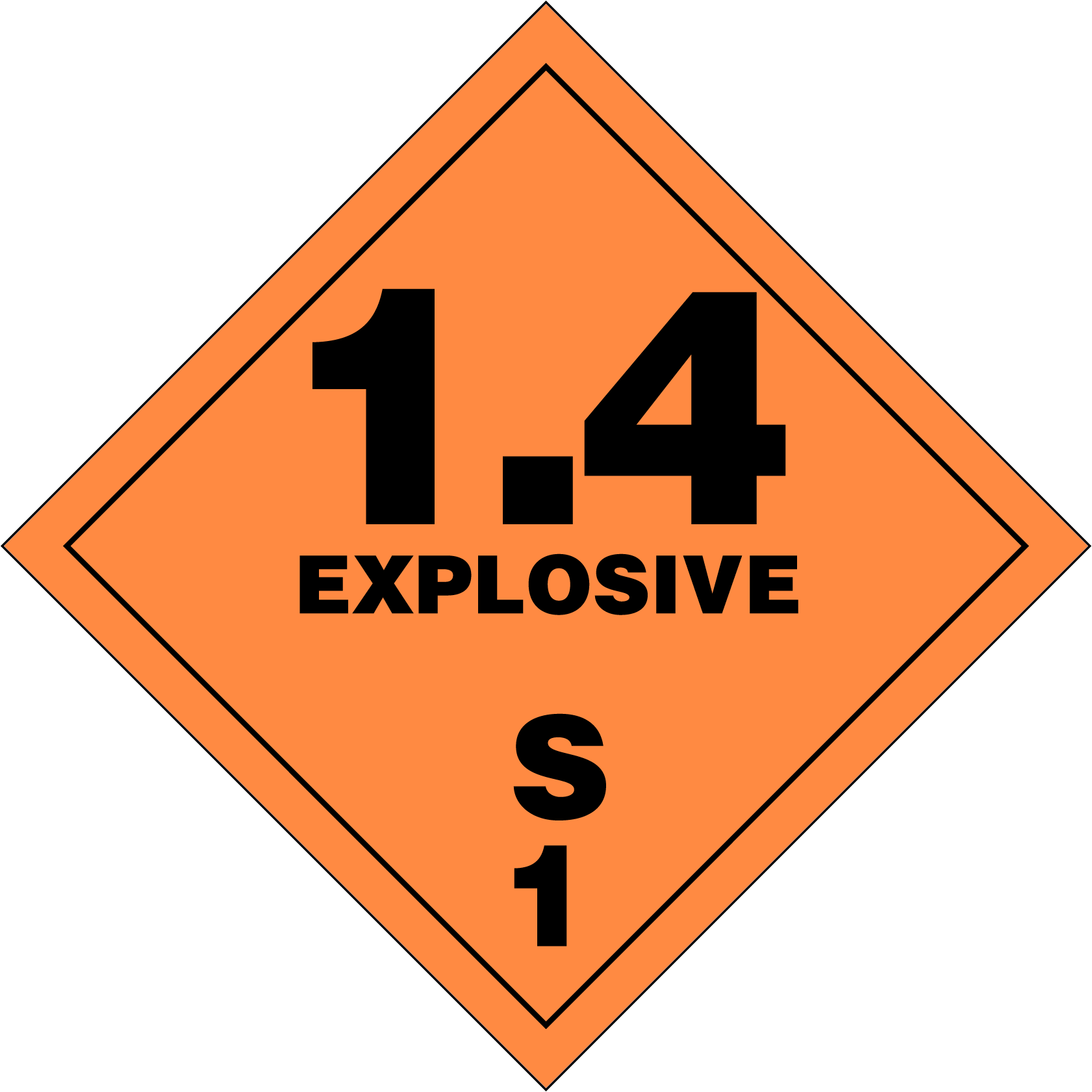
| 3 | 1.4B | 1.4S | 1.2B | 1.1B |
| 4 | UN 0365 | UN 0366 | UN 0364 | UN 0073 |
| 5 | n/a | n/a | n/a | n/a |
| 6 | 1.4B | 1.4S | 1.2B | 1.1B |
| 7 | n/a | 347 | n/a | n/a |
| 8A | None | None | None | None |
| 8B | 62 | 62 | 62 | 62 |
| 8C | None | None | None | None |
| 9A | Forbidden | 25 kg | Forbidden | Forbidden |
| 9B | 75 kg | 100 kg | Forbidden | Forbidden |
| 10A | 05 | 01 | 05 | 05 |
| 10B | 25 | 25 | 25 | 25 |
Segregation chart for load, transport, and storage
This chart shows whether loading, transport, or storage with other hazard classes is permitted, prohibited, or restricted. Based on 49 CFR §177.848.
| Hazard class | 8 | 7 | 6.1 | 5.2 | 5.1 | 4.3 | 4.2 | 4.1 | 3 | 2.3B | 2.3A | 2.2 | 2.1 | 1.6 | 1.5 | 1.4 | 1.3 | 1.1/1.2 |
| 1.1/1.2 |  | | | | | | | | | | | | |  | | | | |
| 1.3 | |  | | | | | | | | | | | | | | | | |
| 1.4 | | | | | | | | | | | | | | | | | ||
| 1.5 | | | | | | | | | | | | | | | | |||
| 1.6 | | | | | | | | | | | | | | | ||||
| 2.1 | | | | | | | | | | | | | | |||||
| 2.2 | | | | | | | | | | | | | ||||||
| 2.3A | | | | | | | | | | | | |||||||
| 2.3B | | | | | | | | | | | ||||||||
| 3 | | | | | | | | | | |||||||||
| 4.1 | | | | | | | | | ||||||||||
| 4.2 | | | | | | | | |||||||||||
| 4.3 | | | | | | | ||||||||||||
| 5.1 | | | | | | |||||||||||||
| 5.2 | | | | | ||||||||||||||
| 6.1 | | | | |||||||||||||||
| 7 | | | ||||||||||||||||
| 8 | |
|
Must not be loaded, transported, or stored together in the same vehicle or facility. |
|
May be loaded, transported, or stored together. |
|
May be loaded, transported, or stored together only with restrictions. |