Ethylene glycol monoethyl ether
2-Ethoxyethanol, also known by the trademark Ethyl cellosolve, is a solvent used widely in commercial and industrial applications. It is a clear, colorless, nearly odorless liquid that is miscible with water, ethanol, diethyl ether, acetone, and ethyl acetate. 2-Ethoxyethanol is manufactured by the reaction of ethylene oxide with ethanol. As with other glycol ethers, 2-ethoxyethanol has the useful property of being able to dissolve chemically diverse compounds Wikipedia
Substance Data
Source:
PubChem (HSDB, 21.10.2026)
CAS-Number110-80-5 |
Flash Point43 ° C | Boiling Point135 ° C |
Hazardous Materials Table
Source:
49 CFR §172 (15 June 2026)
(3) Hazard class 3
Flammable liquids |
UN 1171 |
III |
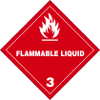 |
×Note:Special provisions may be very complex. The extracts are taken from 49 CFR §172.102. Please be careful with the information, as necessary, additional conditions may be applied that are not written here. Please check the original source and report bugs. | B1 | If the material has a flash point at or above 38 °C (100 °F) and below 93 °C (200 °F), then the bulk packaging requirements of § 173.241 of this subchapter are applicable. If the material has a flash point of less than 38 °C (100 °F), then the bulk packaging requirements of § 173.242 of this subchapter are applicable. Browse special provision B1 |
|---|
| IB3 | <sub>Authorized IBCs:</sub> Metal (31A, 31B and 31N); Rigid plastics (31H1 and 31H2); Composite (31HZ1 and 31HA2, 31HB2, 31HN2, 31HD2 and 31HH2).<br><sub>Additional Requirement:</sub> Only liquids with a vapor pressure less than or equal to 110 kPa at 50 °C (1.1 bar at 122 °F), or 130 kPa at 55 °C (1.3 bar at 131 °F) are authorized, except for UN2672 (also see special provision IP8 in Table 2 for UN2672). Browse special provision IB3 |
|---|
| T2 | <table class="table table-bordered table-condensed ushmr-sp-table"><tr><th>Minimum test pressure (bar)</th><td>1.5</td></tr><tr><th>Minimum shell thickness</th><td>§ 178.274(d)(2)</td></tr><tr><th>Pressure-relief requirements</th><td>Normal</td></tr><tr><th>Bottom opening requirements</th><td>§ 178.275(d)(3)</td></tr></table> Browse special provision T2 |
|---|
| TP1 | The maximum degree of filling must not exceed the degree of filling determined by the following:<br> 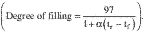 <br>Where: <br>t<sub>r</sub> is the maximum mean bulk temperature during transport, and t<sub>f</sub> is the temperature in degrees celsius of the liquid during filling. Browse special provision TP1 |
|---|
|
|
|
| (9A) Passenger aircraft/rail | 60 L |
|---|
| (9B) Cargo aircraft only | 220 L |
|---|
|
| (10A) Location | A Stowage category “A” means the material may be stowed “on deck” or “under deck” on a cargo vessel or on a passenger vessel. Source: 49 CFR §172.101(k) |
|---|
| (10B) Other | — |
|---|
|
Segregation chart for load, transport, and storage
This chart shows whether loading, transport, or storage with other hazard classes is permitted, prohibited, or restricted. Based on 49 CFR §177.848.
 |
Must not be loaded, transported, or stored together in the same vehicle or facility. |
 |
May be loaded, transported, or stored together. |
 |
May be loaded, transported, or stored together only with restrictions. |
