Trifluorochloroethylene, stabilized or Refrigerant gas R 1113
HMT 15 June 2026Trifluorochloroethylene, stabilized or Refrigerant gas R 1113
Chlorotrifluoroethylene (CTFE) is a chlorofluorocarbon with chemical formula CFCl=CF2. It is commonly used as a refrigerant in cryogenic applications. CTFE has a carbon-carbon double bond and so can be polymerized to form polychlorotrifluoroethylene or copolymerized to produce the plastic ECTFE. PCTFE has the trade name Neoflon PCTFE from Daikin Industries in Japan, and it used to be produced under the trade name Kel-F from 3M Corporation in Minnesota Wikipedia
Substance Data
Source: PubChem (HSDB, 04.12.2019)CAS-Number684-16-2 |
Flash Point— | Boiling Point— |
| Emergency Response Guide No. 119P |
Hazardous Materials Table
Source: 49 CFR §172 (15 June 2026)(3) Hazard class2.3Poisonous gas |
(4) Identification number |
(5) Packing Group |
||||||||
(6) Labels |
||||||||||
(7) Special Provisions (§172.102)
|
||||||||||
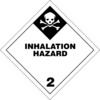
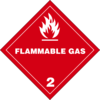
| 3 | |
|---|---|
| 387 | |
| B14 | |
| T50 |
(8) Packing Authorizations (§173.***) 
| (8A) Exceptions | None | |
|---|---|---|
| (8B) Non-bulk | 304 | see 49 CFR §173.304 |
| (8C) Bulk | 314, 315 | see 49 CFR §173.314, 315 |
(9) Quantity Limits
| (9A) Passenger aircraft/rail | Forbidden |
|---|---|
| (9B) Cargo aircraft only | Forbidden |
(10) Vessel stowage
| (10A) Location | |
|---|---|
| (10B) Other |
Segregation chart for load, transport, and storage
This chart shows whether loading, transport, or storage with other hazard classes is permitted, prohibited, or restricted. Based on 49 CFR §177.848.
Scope & sources (important)Click to show CFR references
This check evaluates segregation per 49 CFR §177.848. Additional loading/unloading and handling requirements may still apply; see 49 CFR §177 Subpart B (Loading and Unloading):
- §177.834 - General requirements
- §177.835 - Class 1 materials
- §177.837 - Class 3 materials
- §177.838 - Class 4 (flammable solid) materials, Class 5 (oxidizing) materials, and Division 4.2 (pyroforic liquid) materials
- §177.839 - Class 8 (corrosive) materials
- §177.840 - Class 2 (gases) materials
- §177.841 - Division 6.1 and Division 2.3 materials
- §177.842 - Class 7 (radioactive) material
- §177.843 - Contamination of vehicles