Tetrachloroethylene
HMT 15 June 2026- UN / ID
- UN 1897
- Hazard class
- 6.1
- Packing group
- III
- ERG guide
- ERG 160
- Special provisions
- Source
- 49 CFR §172 (15 June 2026)
Tetrachloroethylene
Tetrachloroethylene, also known as perchloroethylene or under the systematic name tetrachloroethene, and abbreviations such as perc, and PCE, is a chlorocarbon with the formula Cl2C=CCl2. It is a volatile, non-flammable, stable, colorless and dense liquid widely used for dry cleaning of fabrics and as a metal degreasing solvent, formerly as an oral anthelmintic. It has a mild, sweet, sharp odor, detectable by most people at a concentration of 50 ppm. Tetrachloroethylene is produced industrially by the chlorination or oxychlorination of hydrocarbons Wikipedia
Substance Data
Source: PubChem (HSDB, 21.10.2026)CAS-Number127-18-4 |
Flash Point— | Boiling Point121.2 ° C |
| Emergency Response Guide No. 160 |
Hazardous Materials Table
Source: 49 CFR §172 (15 June 2026)(3) Hazard class6.1Poisonous Material |
(4) Identification number |
(5) Packing Group |
|||||||||
(6) Labels |
|||||||||||
(7) Special Provisions (§172.102)
|
|||||||||||

| IB3 | |
|---|---|
| N36 | |
| T4 | |
| TP1 | The maximum degree of filling must not exceed the degree of filling determined by the following: 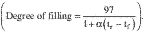 Where: t<sub>r</sub> is the maximum mean bulk temperature during transport, and t<sub>f</sub> is the temperature in degrees celsius of the liquid during filling. |
(8) Packing Authorizations (§173.***) 
| (8A) Exceptions | 153 | see 49 CFR §173.153 |
|---|---|---|
| (8B) Non-bulk | 203 | see 49 CFR §173.203 |
| (8C) Bulk | 241 | see 49 CFR §173.241 |
(9) Quantity Limits
| (9A) Passenger aircraft/rail | 60 L |
|---|---|
| (9B) Cargo aircraft only | 220 L |
(10) Vessel stowage
| (10A) Location | |
|---|---|
| (10B) Other |
Segregation chart for load, transport, and storage
This chart shows whether loading, transport, or storage with other hazard classes is permitted, prohibited, or restricted. Based on 49 CFR §177.848.
Scope & sources (important)Click to show CFR references
This check evaluates segregation per 49 CFR §177.848. Additional loading/unloading and handling requirements may still apply; see 49 CFR §177 Subpart B (Loading and Unloading):
- §177.834 - General requirements
- §177.835 - Class 1 materials
- §177.837 - Class 3 materials
- §177.838 - Class 4 (flammable solid) materials, Class 5 (oxidizing) materials, and Division 4.2 (pyroforic liquid) materials
- §177.839 - Class 8 (corrosive) materials
- §177.840 - Class 2 (gases) materials
- §177.841 - Division 6.1 and Division 2.3 materials
- §177.842 - Class 7 (radioactive) material
- §177.843 - Contamination of vehicles