HazMat Tool — substance information
Arsine
HMT 15 June 2026- UN / ID
- UN 2188
- Hazard class
- 2.3
- Packing group
- —
- ERG guide
- ERG 119
- Special provisions
- SP 1
- Source
- 49 CFR §172 (15 June 2026)
Arsine
Arsine (IUPAC name: arsane) is an inorganic compound with the formula AsH3. This flammable, pyrophoric, and highly toxic pnictogen hydride gas is one of the simplest compounds of arsenic. Despite its lethality, it finds some applications in the semiconductor industry and for the synthesis of organoarsenic compounds. The term arsine is commonly used to describe a class of organoarsenic compounds of the formula AsH3−xRx, where R = aryl or alkyl Wikipedia
Substance Data
Source: PubChem (HSDB, 27.11.2019)CAS-Number7784-42-1 |
Flash Pointn/a | Boiling Pointn/a |
| Emergency Response Guide No. 119 |
Hazardous Materials Table
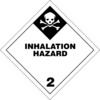
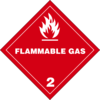
Source: 49 CFR §172 (15 June 2026)(3) Hazard Class2.3Poisonous gas |
(4) Identification number |
(5) Packing Group |
||||||||
(6) Labels |
||||||||||
(7) Special Provisions (§172.102)
|
||||||||||
| 1 |
|---|
(8) Packing Authorizations (§173.***) 
| (8A) Exceptions | None | |
|---|---|---|
| (8B) Non-bulk | 192 | see 49 CFR §173.192 |
| (8C) Bulk | 245 | see 49 CFR §173.245 |
(9) Quantity Limits
| (9A) Passenger aircraft/rail | Forbidden |
|---|---|
| (9B) Cargo aircraft only | Forbidden |
(10) Vessel stowage
| (10A) Location | |
|---|---|
| (10B) Other |
Segregation chart for load, transport, and storage
This chart shows whether loading, transport, or storage with other hazard classes is permitted, prohibited, or restricted. Based on 49 CFR §177.848.
Note: In this segregation and separation chart are HazMat of hazard class 2.3 considered depending on their poisonousness by inhalation (Hazard zone A). See special provision 1 and PHMSA Interpretation #09-0252.
| Hazard class | 8 | 7 | 6.1 | 5.2 | 5.1 | 4.3 | 4.2 | 4.1 | 3 | 2.3B | 2.3A | 2.2 | 2.1 | 1.6 | 1.5 | 1.4 | 1.3 | 1.1/1.2 |
| 1.1/1.2 |  | | | | | | | | | | | | |  | | | | |
| 1.3 | |  | | | | | | | | | | | | | | | | |
| 1.4 | | | | | | | | | | | | | | | | | ||
| 1.5 | | | | | | | | | | | | | | | | |||
| 1.6 | | | | | | | | | | | | | | | ||||
| 2.1 | | | | | | | | | | | | | | |||||
| 2.2 | | | | | | | | | | | | | ||||||
| 2.3A | | | | | | | | | | | | |||||||
| 2.3B | | | | | | | | | | | ||||||||
| 3 | | | | | | | | | | |||||||||
| 4.1 | | | | | | | | | ||||||||||
| 4.2 | | | | | | | | |||||||||||
| 4.3 | | | | | | | ||||||||||||
| 5.1 | | | | | | |||||||||||||
| 5.2 | | | | | ||||||||||||||
| 6.1 | | | | |||||||||||||||
| 7 | | | ||||||||||||||||
| 8 | |
|
Must not be loaded, transported, or stored together in the same vehicle or facility. |
|
May be loaded, transported, or stored together. |
|
May be loaded, transported, or stored together only with restrictions. |
Similar substances
| UN / ID | Proper shipping name | Hazard class |
|---|---|---|
| UN 3522 | Arsine, adsorbed | 2.3 |
| UN 1698 | Diphenylamine chloroarsine | 6.1 |
| UN 1699 | Diphenylchloroarsine, liquid | 6.1 |
| UN 3450 | Diphenylchloroarsine, solid | 6.1 |
| Dichlorovinylchloroarsine | Forbidden | |
| UN 1892 | Ethyldichloroarsine | 6.1 |
| NA 1556 | Methyldichloroarsine | 6.1 |