HazMat Tool — substance information
Reference only — not a shipping paper, placard mandate, or CVI record.
1,2-Dichloroethylene
HMT 15 June 2026- UN / ID
- UN 1150
- Hazard class
- 3
- Packing group
- II
- ERG guide
- ERG 130P
- Special provisions
- Source
- 49 CFR §172 (15 June 2026)
1,2-Dichloroethylene
1,2-Dichloroethylene (1,2-DCE) is a pair of organochlorine compounds with the molecular formula C2H2Cl2. The two compounds are isomers, each being colorless liquids with a sweet odor. It can exist as either of two geometric isomers, cis-1,2-dichloroethene or trans-1,2-dichloroethene, but is often used as a mixture of the two. They have modest solubility in water Wikipedia
Substance Data
Source: PubChem (HSDB, 21.10.2026)CAS-Number156-59-2 |
Flash Point2 ° C | Boiling Point60 ° C |
| Emergency Response Guide No. 130P |
Hazardous Materials Table
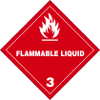
Source: 49 CFR §172 (15 June 2026)(3) Hazard class3Flammable liquids |
(4) Identification number |
(5) Packing Group |
|||||||||
(6) Labels |
|||||||||||
(7) Special Provisions (§172.102)
|
|||||||||||
| IB2 | |
|---|---|
| T7 | |
| TP2 | a. The maximum degree of filling must not exceed the degree of filling determined by the following: 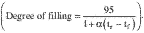 Where: t<sub>r</sub> is the maximum mean bulk temperature during transport, t<sub>f</sub> is the temperature in degrees celsius of the liquid during filling, and α is the mean coefficient of cubical expansion of the liquid between the mean temperature of the liquid during filling (t<sub>f</sub>) and the maximum mean bulk temperature during transportation (t<sub>r</sub>) both in degrees celsius. b. For liquids transported under ambient conditions α may be calculated using the formula:  Where: d<sub>15</sub> and d<sub>50</sub> are the densities (in units of mass per unit volume) of the liquid at 15 °C (59 °F) and 50 °C (122 °F), respectively. |
(8) Packing Authorizations (§173.***) 
| (8A) Exceptions | 150 | see 49 CFR §173.150 |
|---|---|---|
| (8B) Non-bulk | 202 | see 49 CFR §173.202 |
| (8C) Bulk | 242 | see 49 CFR §173.242 |
(9) Quantity Limits
| (9A) Passenger aircraft/rail | 5 L |
|---|---|
| (9B) Cargo aircraft only | 60 L |
(10) Vessel stowage
| (10A) Location | |
|---|---|
| (10B) Other | — |
Segregation chart for load, transport, and storage
This chart shows whether loading, transport, or storage with other hazard classes is permitted, prohibited, or restricted. Based on 49 CFR §177.848.
Full segregation table for class 3 · Browse UN entries for this class
| Hazard class | 8 | 7 | 6.1 | 5.2 | 5.1 | 4.3 | 4.2 | 4.1 | 3 | 2.3B | 2.3A | 2.2 | 2.1 | 1.6 | 1.5 | 1.4 | 1.3 | 1.1/1.2 |
| 1.1/1.2 |  | | | | | | | | | | | | |  | | | | |
| 1.3 | |  | | | | | | | | | | | | | | | | |
| 1.4 | | | | | | | | | | | | | | | | | ||
| 1.5 | | | | | | | | | | | | | | | | |||
| 1.6 | | | | | | | | | | | | | | | ||||
| 2.1 | | | | | | | | | | | | | | |||||
| 2.2 | | | | | | | | | | | | | ||||||
| 2.3A | | | | | | | | | | | | |||||||
| 2.3B | | | | | | | | | | | ||||||||
| 3 | | | | | | | | | | |||||||||
| 4.1 | | | | | | | | | ||||||||||
| 4.2 | | | | | | | | |||||||||||
| 4.3 | | | | | | | ||||||||||||
| 5.1 | | | | | | |||||||||||||
| 5.2 | | | | | ||||||||||||||
| 6.1 | | | | |||||||||||||||
| 7 | | | ||||||||||||||||
| 8 | |
|
Must not be loaded, transported, or stored together in the same vehicle or facility. |
|
May be loaded, transported, or stored together. |
|
May be loaded, transported, or stored together only with restrictions. |
Similar substances
| UN / ID | Proper shipping name | Hazard class |
|---|---|---|
| UN 1082 | Trifluorochloroethylene, stabilized or Refrigerant gas R 1113 | 2.3 |
| UN 1897 | Tetrachloroethylene | 6.1 |
| UN 1710 | Trichloroethylene | 6.1 |