Information only — not personal consulting. Verify against current official regulations. Help and scope
HazMat Tool — substance information
Reference only — not a shipping paper, placard mandate, or CVI record.
Ethylamine, aqueous solution with not less than 50 percent but not more than 70 percent ethylamine
HMT 15 June 2026
Reference only — HMT snapshot for inspection and audit support; not a shipping paper, placard mandate, or CVI record.
Use Print / PDF below for field notes.
Ethylamine, aqueous solution with not less than 50 percent but not more than 70 percent ethylamine
Ethylamine, also known as ethanamine, is an organic compound with the formula C2H7N or CH3CH2NH2. This colourless gas has a strong ammonia-like odor. It condenses just below room temperature to a liquid miscible with virtually all solvents. It is a nucleophilic base, as is typical for amines Wikipedia
×Note: Special provisions may be very complex. The extracts are taken from 49 CFR §172.102. Please be careful with the information, as necessary, additional conditions may be applied that are not written here. Please check the original source and report bugs.
<sub>Authorized IBCs:</sub> Metal (31A, 31B and 31N); Rigid plastics (31H1 and 31H2); Composite (31HZ1).<br><sub>Additional Requirement:</sub> Only liquids with a vapor pressure less than or equal to 110 kPa at 50 °C (1.1 bar at 122 °F), or 130 kPa at 55 °C (1.3 bar at 131 °F) are authorized.
The maximum degree of filling must not exceed the degree of filling determined by the following:<br><br>Where: <br>t<sub>r</sub> is the maximum mean bulk temperature during transport, and t<sub>f</sub> is the temperature in degrees celsius of the liquid during filling.
(i) The material may be stowed “on deck” or “under deck” on a cargo vessel and on a passenger vessel carrying a number of passengers limited to not more than the larger of 25 passengers, or one passenger per each 3 m of overall vessel length; and
(ii) “On deck only” on passenger vessels in which the number of passengers specified in paragraph (k)(2)(i) of this section is exceeded.
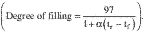 <br>Where: <br>t<sub>r</sub> is the maximum mean bulk temperature during transport, and t<sub>f</sub> is the temperature in degrees celsius of the liquid during filling.


