Lighter refills containing flammable gas not exceeding 4 fluid ounces (7.22 cubic inches) and 65 grams of flammable gas
A lighter is a portable device which uses mechanical or electrical means to create a controlled flame, and can be used to ignite a variety of flammable items, such as cigarettes, butane gas, fireworks, candles, or campfires. Some lighters use a consumable chemical fuel, others use electricity from a battery. A chemical-powered lighter typically consists of a metal or plastic container filled with a flammable liquid, a compressed flammable gas, or in rarer cases a flammable solid (e.g. rope in a trench lighter) Wikipedia
Hazardous Materials Table
Source:
49 CFR §172 (15 June 2026)
(3) Hazard class 2.1
Flammable gases |
UN 1057 |
— |
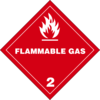 |
×Note:Special provisions may be very complex. The extracts are taken from 49 CFR §172.102. Please be careful with the information, as necessary, additional conditions may be applied that are not written here. Please check the original source and report bugs. | 169 | This entry applies to lighter refills (<i>see</i> § 171.8 of this subchapter) that contain a Division 2.1 (flammable) gas but do not contain an ignition device. Lighter refills offered for transportation under this entry may not exceed 4 fluid ounces capacity (7.22 cubic inches) or contain more than 65 grams of fuel. A lighter refill exceeding 4 fluid ounces capacity (7.22 cubic inches) or containing more than 65 grams of fuel must be classed as a Division 2.1 material, described with the proper shipping name appropriate for the material, and packaged in the packaging specified in part 173 of this subchapter for the flammable gas contained therein. In addition, a container exceeding 4 fluid ounces volumetric capacity (7.22 cubic inches) or containing more than 65 grams of fuel may not be connected or manifolded to a lighter or similar device and must also be described and packaged according to the fuel contained therein. For transportation by passenger-carrying aircraft, the net mass of lighter refills may not exceed 1 kg per package, and, for cargo-only aircraft, the net mass of lighter refills may not exceed 15 kg per package. See § 173.306(h) of this subchapter. Browse special provision 169 |
|---|
|
|
|
| (9A) Passenger aircraft/rail | 1 kg |
|---|
| (9B) Cargo aircraft only | 15 kg |
|---|
|
| (10A) Location | B Stowage category “B” means - (i) The material may be stowed “on deck” or “under deck” on a cargo vessel and on a passenger vessel carrying a number of passengers limited to not more than the larger of 25 passengers, or one passenger per each 3 m of overall vessel length; and
- (ii) “On deck only” on passenger vessels in which the number of passengers specified in paragraph (k)(2)(i) of this section is exceeded.
Source: 49 CFR §172.101(k) |
|---|
| (10B) Other | |
|---|
|
(3) Hazard class 2.1
Flammable gases |
UN 1057 |
— |
| |
×Note:Special provisions may be very complex. The extracts are taken from 49 CFR §172.102. Please be careful with the information, as necessary, additional conditions may be applied that are not written here. Please check the original source and report bugs. | 168 | For lighters containing a Division 2.1 gas (<i>see</i> § 171.8 of this subchapter), representative samples of each new lighter design must be examined and successfully tested as specified in § 173.308(b)(3). For criteria in determining what is a new lighter design, <i>see</i> § 173.308(b)(1). For transportation of new lighter design samples for examination and testing, <i>see</i> § 173.308(b)(2). The examination and testing of each lighter design must be performed by a person authorized by the Associate Administrator under the provisions of subpart E of part 107 of this chapter, as specified in § 173.308(a)(4). For continued use of approvals dated prior to January 1, 2012, <i>see</i> § 173.308(b)(5). <br>For non-pressurized lighters containing a Class 3 (flammable liquid) material, its design, description, and packaging must be approved by the Associate Administrator prior to being offered for transportation or transported in commerce. In addition, a lighter design intended to contain a non-pressurized Class 3 material is excepted from the examination and testing criteria specified in § 173.308(b)(3). An unused lighter or a lighter that is cleaned of residue and purged of vapors is not subject to the requirements of this subchapter. Browse special provision 168 |
|---|
|
|
|
| (9A) Passenger aircraft/rail | 1 kg |
|---|
| (9B) Cargo aircraft only | 15 kg |
|---|
|
| (10A) Location | B Stowage category “B” means - (i) The material may be stowed “on deck” or “under deck” on a cargo vessel and on a passenger vessel carrying a number of passengers limited to not more than the larger of 25 passengers, or one passenger per each 3 m of overall vessel length; and
- (ii) “On deck only” on passenger vessels in which the number of passengers specified in paragraph (k)(2)(i) of this section is exceeded.
Source: 49 CFR §172.101(k) |
|---|
| (10B) Other | |
|---|
|
Packing group comparison
Multiple packing groups apply to this entry. See assignment criteria in 49 CFR §173 Subpart D. Details are in the tabs above; differences are highlighted.
| PG — | PG — |
|---|
| 1 | | |
| 2 | Lighter refills containing flammable gas not exceeding 4 fluid ounces (7.22 cubic inches) and 65 grams of flammable gas | Lighters containing flammable gas |
| 3 | 2.1 | 2.1 |
| 4 | UN 1057 | UN 1057 |
| 5 | — | — |
| 6 | 2.1 | 2.1 |
| 7 | 169 | 168 |
| 8A | 306 | 21,308 |
| 8B | 306 | 21,308 |
| 8C | None | None |
| 9A | 1 kg | 1 kg |
| 9B | 15 kg | 15 kg |
| 10A | B | B |
| 10B | 40 | 40 |
Segregation chart for load, transport, and storage
This chart shows whether loading, transport, or storage with other hazard classes is permitted, prohibited, or restricted. Based on 49 CFR §177.848.
 |
Must not be loaded, transported, or stored together in the same vehicle or facility. |
 |
May be loaded, transported, or stored together. |
 |
May be loaded, transported, or stored together only with restrictions. |
Similar substances
| UN / ID | Proper shipping name | Hazard class |
|---|
| UN 3514 | Adsorbed gas, toxic, flammable, n.o.s. Inhalation hazard zone A | 2.3 |
| UN 3514 | Adsorbed gas, toxic, flammable, n.o.s. Inhalation hazard zone B | 2.3 |
| UN 3514 | Adsorbed gas, toxic, flammable, n.o.s. Inhalation hazard zone C | 2.3 |
| UN 3514 | Adsorbed gas, toxic, flammable, n.o.s. Inhalation hazard zone D | 2.3 |
| UN 3160 | Liquefied gas, toxic, flammable, n.o.s. Inhalation Hazard Zone C | 2.3 |
| UN 3160 | Liquefied gas, toxic, flammable, n.o.s. Inhalation Hazard Zone D | 2.3 |
| UN 1950 | Aerosols, flammable, (each not exceeding 1 L capacity) | 2.1 |
| UN 1950 | Aerosols, non-flammable, (each not exceeding 1 L capacity) | 2.2 |
| UN 3312 | Gas, refrigerated liquid, flammable, n.o.s. (cryogenic liquid) | 2.1 |
| UN 0400 | Bombs with flammable liquid, with bursting charge | 1.2J |
| UN 0399 | Bombs with flammable liquid, with bursting charge | 1.1J |
| UN 3505 | Chemical under pressure, flammable, corrosive, n.o.s | 2.1 |
| UN 3504 | Chemical under pressure, flammable, toxic, n.o.s | 2.1 |
| UN 3181 | Metal salts of organic compounds, flammable, n.o.s | 4.1 |
| UN 3494 | Petroleum sour crude oil, flammable, toxic | 3 |
