Sulfur dioxide
HMT 15 June 2026Sulfur dioxide
Sulfur dioxide (IUPAC-recommended spelling) or sulphur dioxide (traditional Commonwealth English) is the chemical compound with the formula SO2. It is a colorless gas with a pungent smell that is responsible for the odor of burnt matches. It is released naturally by volcanic activity and is produced anthropogenically as a by-product of metals refining and the burning of fossil fuels for energy. Sulfur dioxide is somewhat toxic to humans, although only when inhaled in relatively large quantities for a period of several minutes or more Wikipedia
Substance Data
Source: PubChem (HSDB, 21.10.2026)CAS-Number7446-09-5 |
Flash Point— | Boiling Point-10 ° C |
| Emergency Response Guide No. 125 |
Hazardous Materials Table
Source: 49 CFR §172 (15 June 2026)(3) Hazard class2.3Poisonous gas |
(4) Identification number |
(5) Packing Group |
||||||||
(6) Labels |
||||||||||
(7) Special Provisions (§172.102)
|
||||||||||
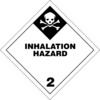
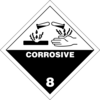
| 3 | |
|---|---|
| B14 | |
| T50 | |
| TP19 |
(8) Packing Authorizations (§173.***) 
| (8A) Exceptions | None | |
|---|---|---|
| (8B) Non-bulk | 304 | see 49 CFR §173.304 |
| (8C) Bulk | 314, 315 | see 49 CFR §173.314, 315 |
(9) Quantity Limits
| (9A) Passenger aircraft/rail | Forbidden |
|---|---|
| (9B) Cargo aircraft only | Forbidden |
(10) Vessel stowage
| (10A) Location | |
|---|---|
| (10B) Other |
Segregation chart for load, transport, and storage
This chart shows whether loading, transport, or storage with other hazard classes is permitted, prohibited, or restricted. Based on 49 CFR §177.848.
Scope & sources (important)Click to show CFR references
This check evaluates segregation per 49 CFR §177.848. Additional loading/unloading and handling requirements may still apply; see 49 CFR §177 Subpart B (Loading and Unloading):
- §177.834 - General requirements
- §177.835 - Class 1 materials
- §177.837 - Class 3 materials
- §177.838 - Class 4 (flammable solid) materials, Class 5 (oxidizing) materials, and Division 4.2 (pyroforic liquid) materials
- §177.839 - Class 8 (corrosive) materials
- §177.840 - Class 2 (gases) materials
- §177.841 - Division 6.1 and Division 2.3 materials
- §177.842 - Class 7 (radioactive) material
- §177.843 - Contamination of vehicles