HazMat Tool — substance information
Reference only — not a shipping paper, placard mandate, or CVI record.
Sodium hydroxide, solid
HMT 15 June 2026Sodium hydroxide, solid
Sodium hydroxide, also known as caustic soda and, more generically, as lye, is an inorganic compound with the formula NaOH. It is a white solid ionic compound consisting of sodium cations Na+ and hydroxide anions OH−. As a strong nucleophile, it is frequently used in SN2 reactions. Sodium hydroxide is a highly corrosive base and alkali that decomposes lipids and proteins at ambient temperatures, and may cause severe chemical burns at high concentrations Wikipedia
Substance Data
Source: PubChem (HSDB, 21.10.2026)CAS-Number1310-73-2 |
Flash Point— | Boiling Point1388 ° C |
| Emergency Response Guide No. 154 |
Hazardous Materials Table
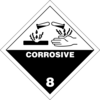
Source: 49 CFR §172 (15 June 2026)(3) Hazard class8Corrosive liquids |
(4) Identification number |
(5) Packing Group |
||||||||||
(6) Labels |
||||||||||||
(7) Special Provisions (§172.102)
|
||||||||||||
| IB8 | |
|---|---|
| IP2 | |
| IP4 | |
| T3 | |
| TP33 |
(8) Packing Authorizations (§173.***) 
| (8A) Exceptions | 154 | see 49 CFR §173.154 |
|---|---|---|
| (8B) Non-bulk | 212 | see 49 CFR §173.212 |
| (8C) Bulk | 240 | see 49 CFR §173.240 |
(9) Quantity Limits
| (9A) Passenger aircraft/rail | 15 kg |
|---|---|
| (9B) Cargo aircraft only | 50 kg |
(10) Vessel stowage
| (10A) Location | |
|---|---|
| (10B) Other |
Segregation chart for load, transport, and storage
This chart shows whether loading, transport, or storage with other hazard classes is permitted, prohibited, or restricted. Based on 49 CFR §177.848.
Hinweis: In der Kompatibilitätstabelle sind Stoffe der Gefahrenklasse 8 nur dann zu berücksichtigen, wenn der Stoff flüssig ist. Derzeit kann HazMat Tool nicht prüfen, ob der Stoff flüssig ist. Dies wird daher hier angenommen. Siehe PHMSA Interpretation #09-0252.
| Hazard class | 8 | 7 | 6.1 | 5.2 | 5.1 | 4.3 | 4.2 | 4.1 | 3 | 2.3B | 2.3A | 2.2 | 2.1 | 1.6 | 1.5 | 1.4 | 1.3 | 1.1/1.2 |
| 1.1/1.2 |  | | | | | | | | | | | | |  | | | | |
| 1.3 | |  | | | | | | | | | | | | | | | | |
| 1.4 | | | | | | | | | | | | | | | | | ||
| 1.5 | | | | | | | | | | | | | | | | |||
| 1.6 | | | | | | | | | | | | | | | ||||
| 2.1 | | | | | | | | | | | | | | |||||
| 2.2 | | | | | | | | | | | | | ||||||
| 2.3A | | | | | | | | | | | | |||||||
| 2.3B | | | | | | | | | | | ||||||||
| 3 | | | | | | | | | | |||||||||
| 4.1 | | | | | | | | | ||||||||||
| 4.2 | | | | | | | | |||||||||||
| 4.3 | | | | | | | ||||||||||||
| 5.1 | | | | | | |||||||||||||
| 5.2 | | | | | ||||||||||||||
| 6.1 | | | | |||||||||||||||
| 7 | | | ||||||||||||||||
| 8 | |
|
Must not be loaded, transported, or stored together in the same vehicle or facility. |
|
May be loaded, transported, or stored together. |
|
May be loaded, transported, or stored together only with restrictions. |