HazMat Tool — substance information
Reference only — not a shipping paper, placard mandate, or CVI record.
Corrosive solids, water-reactive, n.o.s
HMT 15 June 2026Corrosive solids, water-reactive, n.o.s
A corrosive material is a liquid or solid that causes full thickness destruction of human skin at the site of contact within a specified period of time. A liquid that has a severe corrosion rate on steel or aluminum based on the criteria in 49CFR 173.137(c)(2) is also a corrosive material More Information
| Emergency Response Guide No. 138 |
Hazardous Materials Table
Source: 49 CFR §172 (15 June 2026)(3) Hazard class8Corrosive liquids |
(4) Identification number |
(5) Packing Group |
||||||||
(6) Labels |
||||||||||
(1) Symbols |
||||||||||
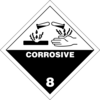
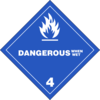
| IB4 | |
|---|---|
| IP1 | |
| T6 | |
| TP33 |
(8) Packing Authorizations (§173.***) 
| (8A) Exceptions | None | |
|---|---|---|
| (8B) Non-bulk | 211 | see 49 CFR §173.211 |
| (8C) Bulk | 243 | see 49 CFR §173.243 |
(9) Quantity Limits
| (9A) Passenger aircraft/rail | 1 kg |
|---|---|
| (9B) Cargo aircraft only | 25 kg |
(10) Vessel stowage
| (10A) Location | |
|---|---|
| (10B) Other |
(3) Hazard class8Corrosive liquids |
(4) Identification number |
(5) Packing Group |
||||||||||
(6) Labels |
||||||||||||
(1) Symbols |
||||||||||||
| IB6 | |
|---|---|
| IP2 | |
| T3 | |
| TP33 | |
| W100 |
(8) Packing Authorizations (§173.***)
| (8A) Exceptions | 154 | see 49 CFR §173.154 |
|---|---|---|
| (8B) Non-bulk | 212 | see 49 CFR §173.212 |
| (8C) Bulk | 242 | see 49 CFR §173.242 |
(9) Quantity Limits
| (9A) Passenger aircraft/rail | 15 kg |
|---|---|
| (9B) Cargo aircraft only | 50 kg |
(10) Vessel stowage
| (10A) Location | |
|---|---|
| (10B) Other |
Packing group comparison
Multiple packing groups apply to this entry. See assignment criteria in 49 CFR §173 Subpart D. Details are in the tabs above; differences are highlighted.
Segregation chart for load, transport, and storage
This chart shows whether loading, transport, or storage with other hazard classes is permitted, prohibited, or restricted. Based on 49 CFR §177.848.
Note: In this segregation and separation chart are HazMat of hazard class 8 considered depending if there are liquid. Currently HazMat Tool is not able to to check if a HazMat is liquid or not. Therefore it is assumed as liquid. See PHMSA Interpretation #09-0252.
| Hazard class | 8 | 7 | 6.1 | 5.2 | 5.1 | 4.3 | 4.2 | 4.1 | 3 | 2.3B | 2.3A | 2.2 | 2.1 | 1.6 | 1.5 | 1.4 | 1.3 | 1.1/1.2 |
| 1.1/1.2 |  | | | | | | | | | | | | |  | | | | |
| 1.3 | |  | | | | | | | | | | | | | | | | |
| 1.4 | | | | | | | | | | | | | | | | | ||
| 1.5 | | | | | | | | | | | | | | | | |||
| 1.6 | | | | | | | | | | | | | | | ||||
| 2.1 | | | | | | | | | | | | | | |||||
| 2.2 | | | | | | | | | | | | | ||||||
| 2.3A | | | | | | | | | | | | |||||||
| 2.3B | | | | | | | | | | | ||||||||
| 3 | | | | | | | | | | |||||||||
| 4.1 | | | | | | | | | ||||||||||
| 4.2 | | | | | | | | |||||||||||
| 4.3 | | | | | | | ||||||||||||
| 5.1 | | | | | | |||||||||||||
| 5.2 | | | | | ||||||||||||||
| 6.1 | | | | |||||||||||||||
| 7 | | | ||||||||||||||||
| 8 | |
|
Must not be loaded, transported, or stored together in the same vehicle or facility. |
|
May be loaded, transported, or stored together. |
|
May be loaded, transported, or stored together only with restrictions. |