HazMat Tool — substance information
Reference only — not a shipping paper, placard mandate, or CVI record.
Hydrogen chloride, anhydrous
HMT 15 June 2026- UN / ID
- UN 1050
- Hazard class
- 2.3
- Packing group
- —
- ERG guide
- ERG 125
- Special provisions
- SP 3, SP N86, SP N89
- Source
- 49 CFR §172 (15 June 2026)
Hydrogen chloride, anhydrous
The compound hydrogen chloride has the chemical formula HCl and as such is a hydrogen halide. At room temperature, it is a colorless gas, which forms white fumes of hydrochloric acid upon contact with atmospheric water vapor. Hydrogen chloride gas and hydrochloric acid are important in technology and industry. Hydrochloric acid, the aqueous solution of hydrogen chloride, is also commonly given the formula HCl Wikipedia
| Emergency Response Guide No. 125 |
Hazardous Materials Table
Source: 49 CFR §172 (15 June 2026)(3) Hazard class2.3Poisonous gas |
(4) Identification number |
(5) Packing Group |
|||||||
(6) Labels |
|||||||||
(7) Special Provisions (§172.102)
|
|||||||||
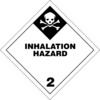
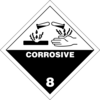
| 3 | |
|---|---|
| N86 | |
| N89 |
(8) Packing Authorizations (§173.***) 
| (8A) Exceptions | None | |
|---|---|---|
| (8B) Non-bulk | 304 | see 49 CFR §173.304 |
| (8C) Bulk | None |
(9) Quantity Limits
| (9A) Passenger aircraft/rail | Forbidden |
|---|---|
| (9B) Cargo aircraft only | Forbidden |
(10) Vessel stowage
| (10A) Location | |
|---|---|
| (10B) Other |
Segregation chart for load, transport, and storage
This chart shows whether loading, transport, or storage with other hazard classes is permitted, prohibited, or restricted. Based on 49 CFR §177.848.
Note: In this segregation and separation chart are HazMat of hazard class 2.3 considered depending on their poisonousness by inhalation (Hazard zone A/B). See PHMSA Interpretation #09-0252.
Scope & sources (important)Click to show CFR references
This check evaluates segregation per 49 CFR §177.848. Additional loading/unloading and handling requirements may still apply; see 49 CFR §177 Subpart B (Loading and Unloading):
- §177.834 - General requirements
- §177.835 - Class 1 materials
- §177.837 - Class 3 materials
- §177.838 - Class 4 (flammable solid) materials, Class 5 (oxidizing) materials, and Division 4.2 (pyroforic liquid) materials
- §177.839 - Class 8 (corrosive) materials
- §177.840 - Class 2 (gases) materials
- §177.841 - Division 6.1 and Division 2.3 materials
- §177.842 - Class 7 (radioactive) material
- §177.843 - Contamination of vehicles