Liquefied gas toxic, flammable, corrosive, n.o.s. Inhalation Hazard Zone B
HMT 15 June 2026- UN / ID
- UN 3309
- Hazard class
- 2.3
- Packing group
- — (multiple — see tabs)
- ERG guide
- ERG 119
- Special provisions
- SP 2, SP B9, SP B14
- Source
- 49 CFR §172 (15 June 2026)
Liquefied gas toxic, flammable, corrosive, n.o.s. Inhalation Hazard Zone B
Liquefied natural gas (sometimes liquid natural gas, frequently LNG) is natural gas (predominantly methane, CH4, with some mixture of ethane, C2H6) that has been cooled to liquid form for ease and safety of non-pressurized storage or transport. It takes up approximately 1/600th the volume of natural gas in the gaseous state at standard temperature and pressure. LNG is odorless, colorless, non-toxic, and non-corrosive. Hazards include flammability after vaporization into a gaseous state, freezing and asphyxiation Wikipedia
| Emergency Response Guide No. 119 |
Hazardous Materials Table
Source: 49 CFR §172 (15 June 2026)(3) Hazard class2.3Poisonous gas |
(4) Identification number |
(5) Packing Group |
||||||||
(6) Labels |
||||||||||
(1) Symbols |
||||||||||
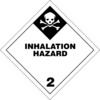
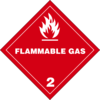

| 2 | |
|---|---|
| B9 | |
| B14 |
(8) Packing Authorizations (§173.***) 
| (8A) Exceptions | None | |
|---|---|---|
| (8B) Non-bulk | 304 | see 49 CFR §173.304 |
| (8C) Bulk | 314, 315 | see 49 CFR §173.314, 315 |
(9) Quantity Limits
| (9A) Passenger aircraft/rail | Forbidden |
|---|---|
| (9B) Cargo aircraft only | Forbidden |
(10) Vessel stowage
| (10A) Location | |
|---|---|
| (10B) Other |
(3) Hazard class2.3Poisonous gas |
(4) Identification number |
(5) Packing Group |
||||||||
(6) Labels |
||||||||||
(1) Symbols |
||||||||||
| 1 |
|---|
(8) Packing Authorizations (§173.***)
| (8A) Exceptions | None | |
|---|---|---|
| (8B) Non-bulk | 192 | see 49 CFR §173.192 |
| (8C) Bulk | 245 | see 49 CFR §173.245 |
(9) Quantity Limits
| (9A) Passenger aircraft/rail | Forbidden |
|---|---|
| (9B) Cargo aircraft only | Forbidden |
(10) Vessel stowage
| (10A) Location | |
|---|---|
| (10B) Other |
(3) Hazard class2.3Poisonous gas |
(4) Identification number |
(5) Packing Group |
||||||||
(6) Labels |
||||||||||
(1) Symbols |
||||||||||
| 3 | |
|---|---|
| B14 |
(8) Packing Authorizations (§173.***)
| (8A) Exceptions | None | |
|---|---|---|
| (8B) Non-bulk | 304 | see 49 CFR §173.304 |
| (8C) Bulk | 314, 315 | see 49 CFR §173.314, 315 |
(9) Quantity Limits
| (9A) Passenger aircraft/rail | Forbidden |
|---|---|
| (9B) Cargo aircraft only | Forbidden |
(10) Vessel stowage
| (10A) Location | |
|---|---|
| (10B) Other |
(3) Hazard class2.3Poisonous gas |
(4) Identification number |
(5) Packing Group |
||||||||
(6) Labels |
||||||||||
(1) Symbols |
||||||||||
| 4 |
|---|
(8) Packing Authorizations (§173.***)
| (8A) Exceptions | None | |
|---|---|---|
| (8B) Non-bulk | 304 | see 49 CFR §173.304 |
| (8C) Bulk | 314, 315 | see 49 CFR §173.314, 315 |
(9) Quantity Limits
| (9A) Passenger aircraft/rail | Forbidden |
|---|---|
| (9B) Cargo aircraft only | Forbidden |
(10) Vessel stowage
| (10A) Location | |
|---|---|
| (10B) Other |
Packing group comparison
Multiple packing groups apply to this entry. See assignment criteria in 49 CFR §173 Subpart D. Details are in the tabs above; differences are highlighted.
| PG — | PG — | PG — | PG — | |
|---|---|---|---|---|
| 1 | G I | G I | G I | G I |
| 2 | Liquefied gas toxic, flammable, corrosive, n.o.s. Inhalation Hazard Zone B | Liquefied gas, toxic, flammable, corrosive, n.o.s. Inhalation Hazard Zone A | Liquefied gas, toxic, flammable, corrosive, n.o.s. Inhalation Hazard Zone C | Liquefied gas, toxic, flammable, corrosive, n.o.s. Inhalation Hazard Zone D |
| 3 | 2.3 | 2.3 | 2.3 | 2.3 |
| 4 | UN 3309 | UN 3309 | UN 3309 | UN 3309 |
| 5 | — | — | — | — |
| 6 | 2.3, 2.1, 8 | 2.3, 2.1, 8 | 2.3, 2.1, 8 | 2.3, 2.1, 8 |
| 7 | 2, B9, B14 | 1 | 3, B14 | 4 |
| 8A | None | None | None | None |
| 8B | 304 | 192 | 304 | 304 |
| 8C | 314, 315 | 245 | 314, 315 | 314, 315 |
| 9A | Forbidden | Forbidden | Forbidden | Forbidden |
| 9B | Forbidden | Forbidden | Forbidden | Forbidden |
| 10A | D | D | D | D |
| 10B | 17, 40 | 17, 40 | 17, 40 | 17, 40 |
Segregation chart for load, transport, and storage
This chart shows whether loading, transport, or storage with other hazard classes is permitted, prohibited, or restricted. Based on 49 CFR §177.848.
Scope & sources (important)Click to show CFR references
This check evaluates segregation per 49 CFR §177.848. Additional loading/unloading and handling requirements may still apply; see 49 CFR §177 Subpart B (Loading and Unloading):
- §177.834 - General requirements
- §177.835 - Class 1 materials
- §177.837 - Class 3 materials
- §177.838 - Class 4 (flammable solid) materials, Class 5 (oxidizing) materials, and Division 4.2 (pyroforic liquid) materials
- §177.839 - Class 8 (corrosive) materials
- §177.840 - Class 2 (gases) materials
- §177.841 - Division 6.1 and Division 2.3 materials
- §177.842 - Class 7 (radioactive) material
- §177.843 - Contamination of vehicles